


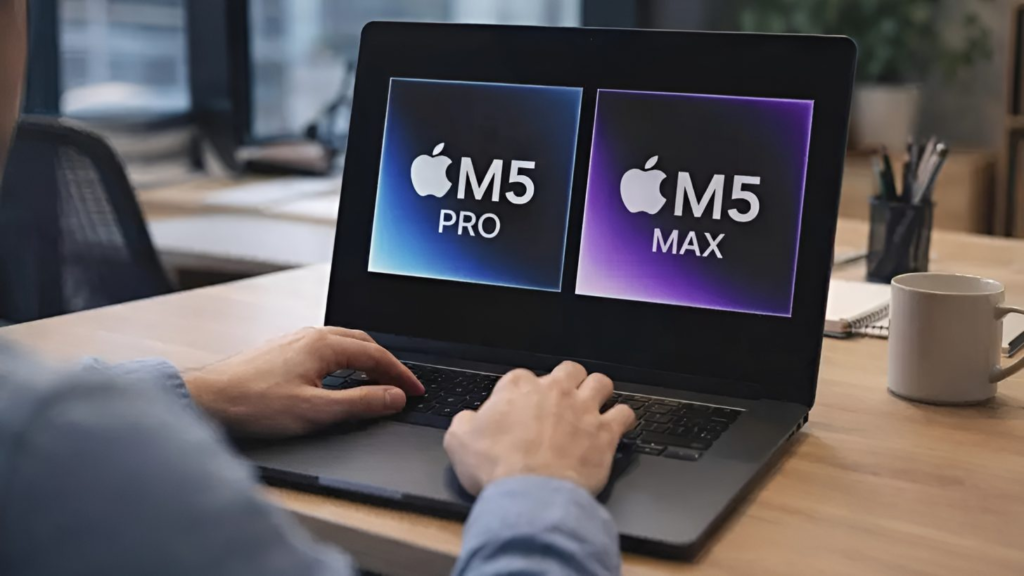
Apple may ship the M5 Pro and M5 Max in new MacBook Pro models with a different kind of chip packaging. The new package style is called SoIC. It stacks and links smaller chip sections in a way that lowers electrical resistance and helps move heat away from hot spots. Reporters and industry watchers have noted the rumor and the likely effect on performance and thermal behavior.
Packaging Changes Explained
Small changes to how a chip is built can change how fast it can run for long periods. The SoIC method sits inside TSMC’s 3DFabric family of packaging tools. SoIC lets makers place several smaller die next to or on top of each other. The result is shorter wires between the CPU and GPU sections. Shorter wires mean less power loss and lower heat at the places that matter most. TSMC describes SoIC as part of its effort to link chip parts with very high density while keeping signal paths short.
SoIC is not the same as older InFO packaging. InFO is great for single die designs and very thin phones. SoIC is built to handle many small chip pieces at once. In practice, that can mean better thermal routing and better electrical performance. Industry papers and packaging tutorials show that 2.5D and 3D style packages give higher bandwidth and lower latency for link lines between chip parts. Those gains translate into more stable performance under load.
Real World Impact
For users, the two main effects are cooler-running chips and higher sustained speed. A chip that runs cooler will throttle less under long workloads. That helps with video editing, rendering, and heavy coding tasks. The change also gives Apple more flexibility. By mixing smaller CPU and GPU die like building blocks, Apple can make different chip mixes more cheaply. This can lower waste in production and reduce the need to bin chips to meet yield targets. Analysts and supply chain sources have discussed how chiplet-style designs can cut per-unit cost and speed time to market.
What to Expect in the New MacBook Pros
Do not expect huge changes to the user interface from this packaging step. The gains show up in extended workloads and in battery life under heavy tasks. For many users, the difference will be subtle on short tasks. The real benefit appears when work runs for many minutes. The chips can keep clock speeds higher for longer and do so while keeping surface heat lower. That can let thinner laptops deliver better sustained performance without louder fans. Industry observers have tied reports about an M5 Pro and M5 Max update to these packaging changes, noting that the move is technically feasible and fits known supplier road maps.