
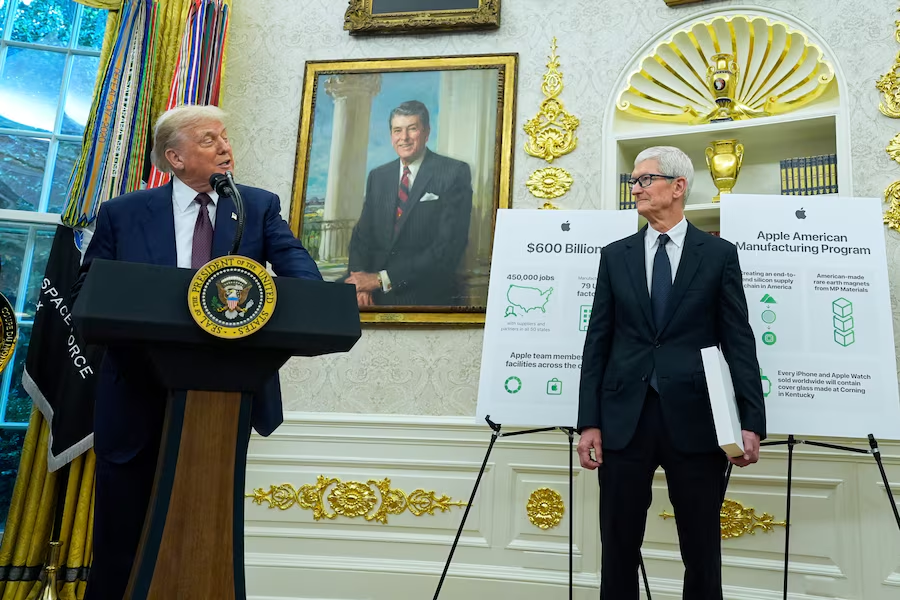

Apple announced an extra one hundred billion dollars in US investment. The company framed the move as a long-term bet on research, development, and manufacturing in America. Apple said the plan will hire people for R D and chip engineering and expand supplier work across the country.
The White House and the company presented the plan in the same week that the president signaled that firms investing in US manufacturing would be spared from proposed semiconductor tariffs. That policy created room for Apple to avoid a new tariff threat while keeping most iPhone assembly overseas.
What the investment means now
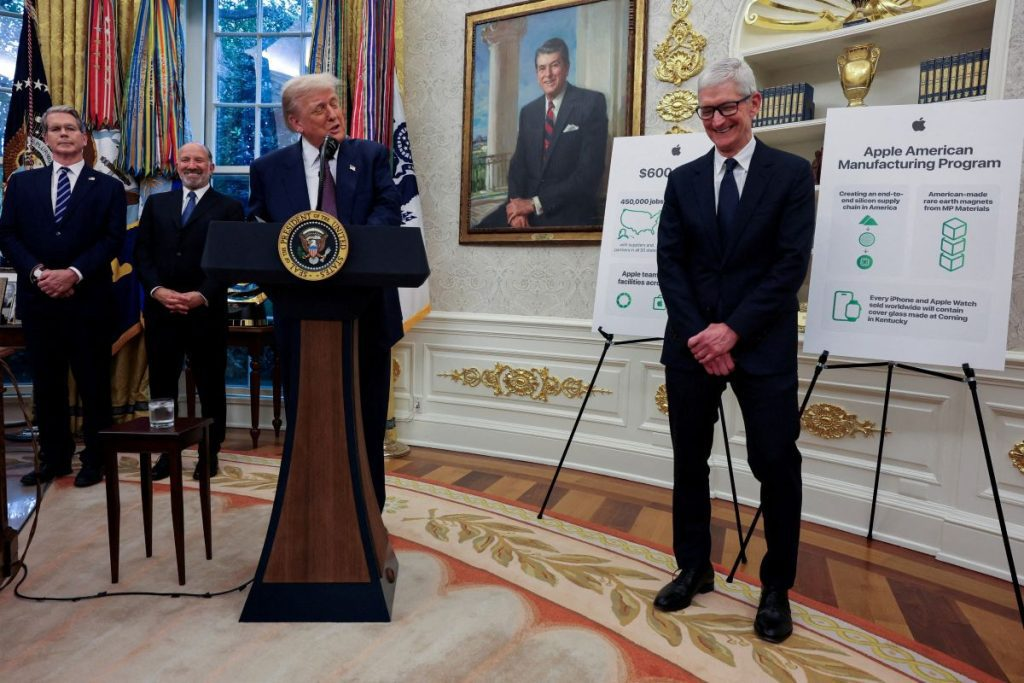
The extra spending will deepen Apple’s work in the United States. The money will go to research centers, server projects, and more supplier deals inside the country. Apple said it will hire more workers for high-skilled roles and train teams for advanced manufacturing. The move expands jobs and will boost US-based design and chip work, even if final assembly stays abroad.
The president responded by noting Apple already makes many components inside the United States. He also said that incentives might one day lead to more final assembly in America. The comment came during a public briefing where the tone suggested that the new pledge was sufficient for now. The White House also signaled exemptions from tariff plans for companies that commit to US production.
Why final iPhone assembly still happens overseas
The iPhone relies on a global network of suppliers and factories. Only a small share of iPhone parts are made inside the United States. Industry analysis shows that less than five percent of components are produced on US soil. That reality makes a full domestic build both costly and technically difficult. The supply chain for parts and final assembly has developed over decades in Asia and across many countries.
Final assembly requires coordinated lines of suppliers and large numbers of trained workers. Many parts and tools are not available in the United States at the scale that Apple needs. Moving the whole process would require huge new factories and many years of investment. The extra cost would likely raise iPhone prices for most buyers. Analysts say that is a major reason Apple keeps final assembly in Asia even as it boosts US investment.
The policy context in Washington
The president announced his intent to tax imported chips at high rates while carving out exemptions for firms that invest in domestic production. That stance changes the calculus for global makers. A pledge of new US investment can lower the risk of new trade penalties. For Apple, the extra spending bought political goodwill and a clearer path around sudden tariff exposure. Markets reacted by rewarding firms that promised more US manufacturing.
This trade approach aims to raise US-based production quickly. It also creates pressure on suppliers to expand US operations. Some firms will add plants in the United States. Others will keep key production steps overseas because of cost and scale. The result is more investment in US research centers and chip work rather than a shift of final smartphone assembly to US factories at scale.
What this means for Apple customers and the market
Customers should not expect an American-built iPhone any time soon. The new commitment will likely show up as more research jobs, server projects, and US supply chain contracts rather than a sudden move of assembly lines to America. Apple can point to the new spending as progress while keeping device prices stable and maintaining current manufacturing efficiency.
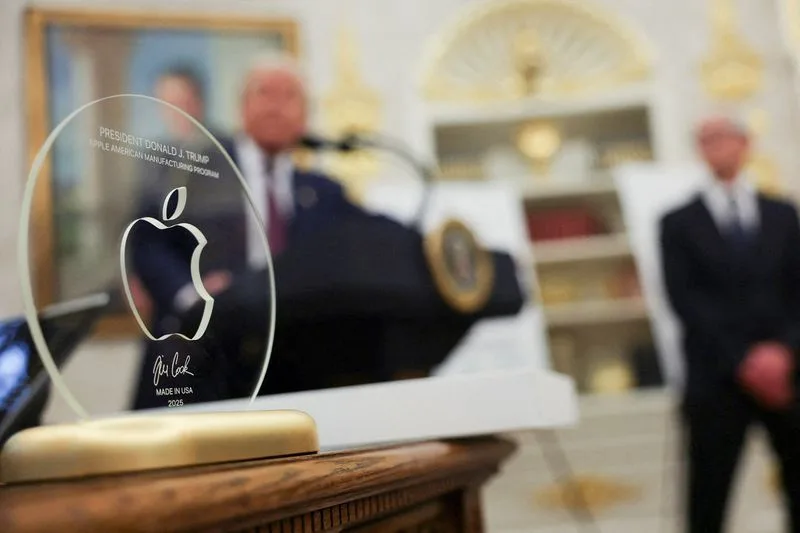
The broader industry will feel the effects in several ways. Some chip and equipment makers will accelerate US projects. Some suppliers will open new US facilities for select parts. Final assembly will remain concentrated in places that already host the dense supplier networks and assembly expertise. Over time, the balance may shift, but not overnight. Analysts expect a gradual change, not a sudden full return of smartphone assembly to the United States.
Apple and the administration framed the announcement as a win for US jobs and innovation. The company gained a public show of support and an exemption from an immediate tariff threat. The firm also kept the flexibility to manufacture where it makes the most sense. For now, the result is more US investment and a clear message that an American-assembled iPhone will remain a long-term goal, not a near-term reality.
Readers who follow supply chain changes should watch for new factory plans from Apple suppliers and for incremental onshore moves by chip makers. Those steps will show where the new investment lands and whether it starts to change where iPhones are assembled in the years ahead.