
Nvidia made waves this week as reports surfaced that it struck a deal with Groq, a fast-rising specialist in hardware for AI inference. Early coverage described the move as a roughly $20 billion deal. Shortly after those reports, Groq and other outlets published details showing the agreement is structured around licensing and talent moves rather than a straightforward full asset takeover. The result is a complex outcome that matters for data center design, cloud competition, and regulators.
What happened
Initial news outlets reported that Nvidia planned to acquire Groq for about twenty billion dollars. That report caught market attention because that price would make this Nvidia’s largest known deal to date by value.
Groq later published its own statement saying the companies reached a technology and talent agreement. The statement described a non-exclusive licensing relationship for Groq intellectual property and the transfer of key personnel into Nvidia teams in certain roles. Groq said it will continue to operate and support its customers while the newly announced industry agreement is implemented.
The two sets of accounts together create uncertainty about whether the transaction is a full cash purchase or a large-value licensing and personnel arrangement. Either way, the news marks a major strategic step for Nvidia and for the broader inference computing market.
What Groq builds
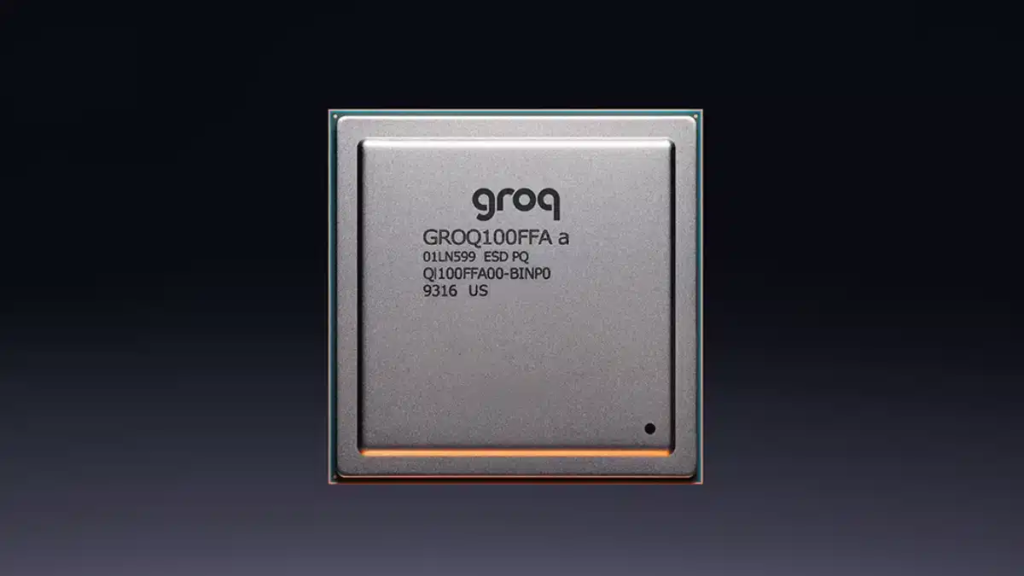
Groq designs AI accelerators that focus on inference workloads. Inference is the phase when trained models answer queries, drive chatbots, run real-time features, or power live AI services.
Groq chips are built to deliver very low latency and predictable throughput for production AI tasks. The architecture aims to make inference fast and repeatable. That specialization gives Groq a distinct role compared with general-purpose GPUs that dominate model training.
Groq won attention from cloud engineers and enterprises that want consistent latency and simpler software stacks for production deployments. That profile made Groq an attractive partner or target for a large platform vendor.
Why Nvidia cares
Nvidia’s business has grown on training chips and software. The company also provides networking and system software that help run large AI clusters. Nvidia’s strategy is to own a broad portion of the AI compute stack. Groq’s focus on inference matches the next phase of market growth.
There are three main reasons this deal matters to Nvidia.
First, the market shift. The industry is moving from model creation to wide-scale deployment. That creates a vast demand for efficient inference hardware that can serve a trillion small queries per day. Nvidia wants to be central to both training and inference.
Second, product breadth. Owning or licensing inference technology lets Nvidia offer end-to-end solutions that combine GPUs, accelerators, networking, and software. That is valuable to cloud providers and large enterprises that prefer single vendor support for performance and integration.
Third, competitive advantage. Specialized inference hardware can lower the cost per query. That helps companies run more AI features at scale. Nvidia’s move is meant to secure another technical route to improved price performance and to make switching away from its ecosystem harder.