

A new research project is testing whether people can control the Apple Vision Pro with brain signals without surgery. The study is led by Cognixion, a company that builds noninvasive brain-computer interfaces. The goal is to help people who have lost speech or mobility to use spatial computing for communication and daily tasks.
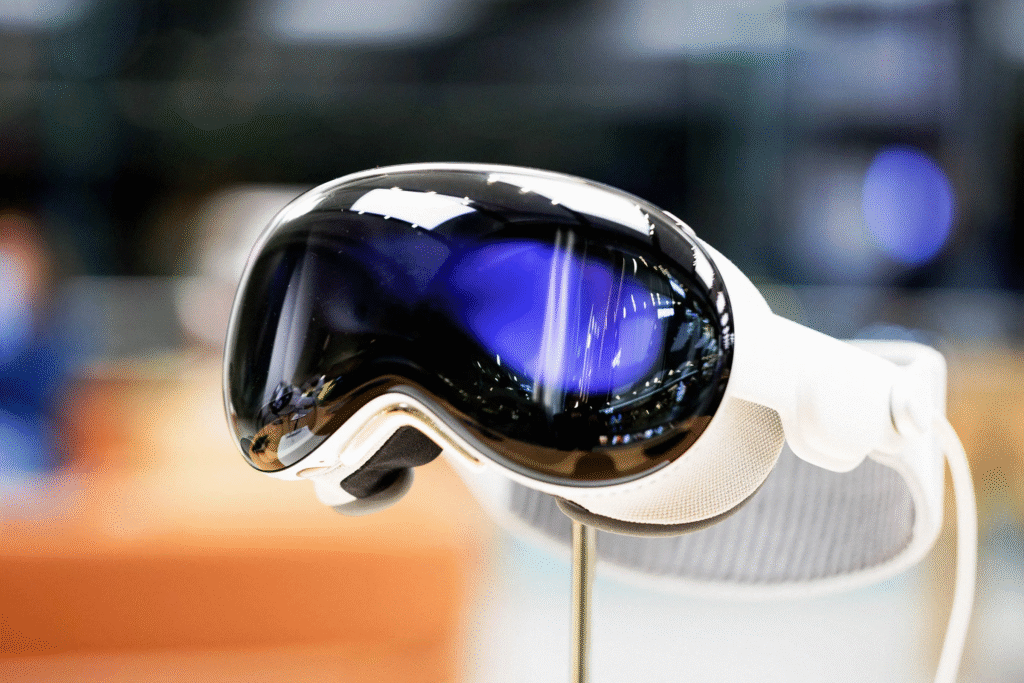
The project will pair Cognixion technology with the Vision Pro accessibility tools. The study will test gaze tracking and dwell control with brain sensing. The team will study safety and user experience. The work could help people with ALS, stroke, and spinal cord injury.
Study goals and design
Cognixion says the trial will measure how well noninvasive brain sensing works with the Vision Pro user interface. The team will test whether users can select items and send messages using neural inputs plus gaze controls. The work will also look at comfort and real-world use. The trial is open now and will run through April of next year.
Researchers plan to use EEG-style sensors that sit on the scalp. These do not require surgery. The system will use AI to clean noisy signals and to translate intent into actions. The team wants to avoid implants while keeping control accurate and fast. Web reports note noise and motion as known hurdles for noninvasive sensors. The study aims to address these limits in real settings.

Why it matters
A simple brain-driven interface for the Vision Pro could change life for many people. Millions of adults live with chronic disabilities that affect speech and movement. If the system works, it could let users join video calls, browse the web, and control apps without hands. Cognixion says this could bring more independence and more natural interaction.
Apple is not listed as a formal partner in the study. The trial uses public Vision Pro features and third-party devices. Apple has built strong accessibility tools into its devices, and that makes this kind of work possible. Researchers say the combination of device-level access and new neural inputs is promising.