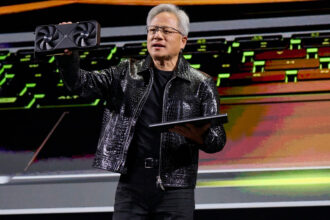

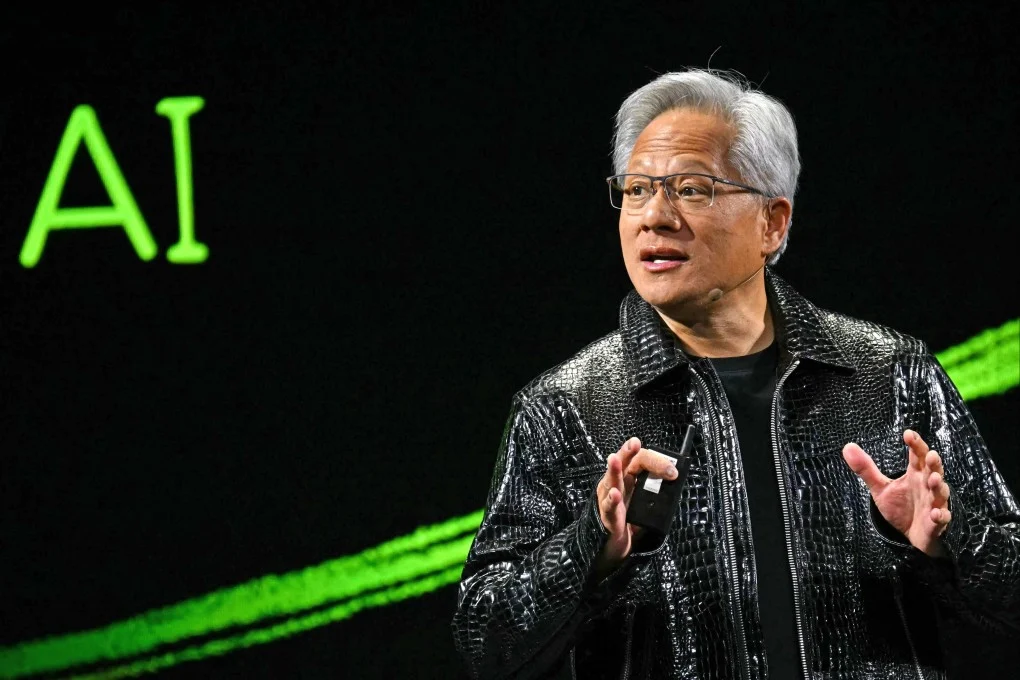
NVIDIA chief executive Jensen Huang said that China is just nanoseconds behind the United States in chip development on a tech podcast. He said it in order to make a simple point. The gap is very small in technical terms. Huang said that close competition will push innovation and benefit global markets.
Huang made the comments on the BG2 podcast hosted by Brad Gerstner and Bill Gurley. He argued that US firms should remain able to compete in global markets. He said that doing so will help spread technology and strengthen American influence in the world.
China chip gap
The comment comes as Washington and Beijing press firms on trade and security matters. Export rules and political steps have limited sales of some advanced NVIDIA chips in China. Those curbs have affected NVIDIA’s revenue and strategy in the Chinese market.
NVIDIA and other US chipmakers have navigated shifting rules this year. In mid-2025, the US allowed limited shipments of a China-specific H20 GPU after earlier restrictions. The company has also faced new regulatory pressure from Beijing. Those dynamics show how technology and policy now move together.
NVIDIA and China
Huang described China as a vibrant market with strong local talent and fast work. He said that Chinese groups often try to build systems without reliance on foreign suppliers. He added that open competition is good for customers and for long-term science and engineering.
Industry watchers note that a gap measured in nanoseconds can still translate to large differences in overall system performance. The time a chip needs to move data or run a calculation matters a lot when many chips work together. That is one reason NVIDIA invests heavily in both hardware design and interconnect technology.
What this means for customers is that choices will shape where capabilities land. Cloud providers and national labs will pick systems that give the best price and performance for their workloads. Firms that combine strong chips with efficient systems can keep an edge even as rivals close technical gaps.
Huang warned that policy steps can change markets overnight. He urged lawmakers to consider how trade rules affect innovation and jobs. He framed the issue as one where technology and diplomacy both matter. Observers say the push and pull between access and control will define the next wave of AI hardware competition.
The practical view for readers is simple. China is close to technical measures. That proximity raises stakes for firms and for nations. It also means that small technical advances can yield large commercial differences. Huang used clear language to press for competition and for policies that allow US companies to sell broadly when it is in the national interest.