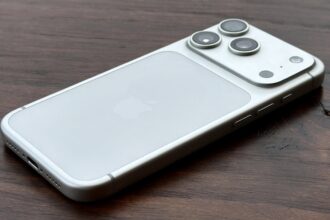


Apple is set to announce new iPhones in early September. One model has drawn extra attention. The handset called iPhone 17 Air may aim to be the company thinnest phone and to offer a new balance of light weight and style. Early reports say the model will trade some camera and battery capacity in order to reach an ultra slim profile.
Design and display
Rumors put the iPhone 17 Air at about 5.5 mm at its thinnest point. That measures the phone body before the camera module is taken into account. If this turns out to be true then Apple will produce its slimmest iPhone to date.
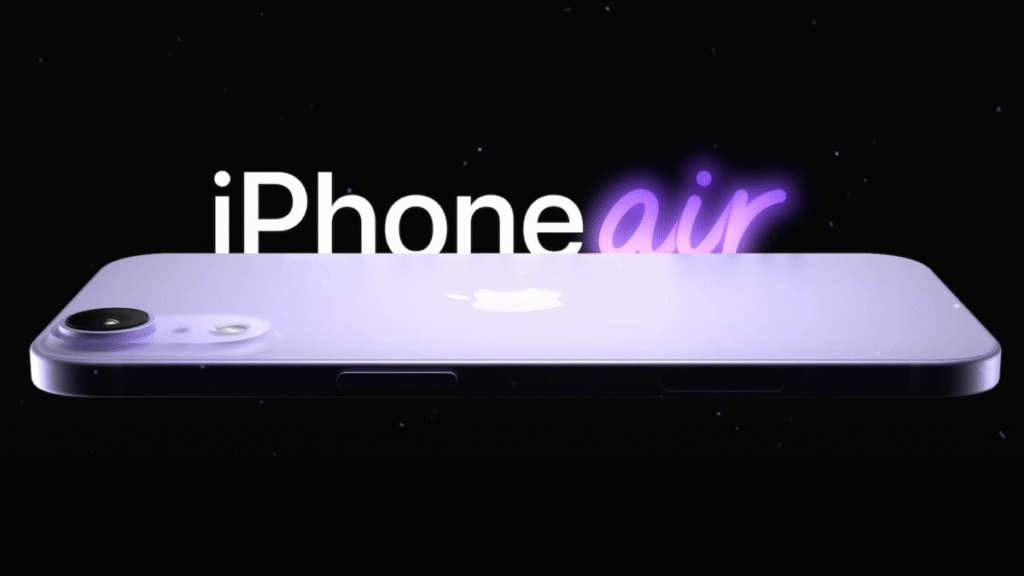
The device is likely to use a 6.6-inch OLED screen. Reports say the display will support a 120 Hz refresh rate and it will include Always On functionality similar to other recent models. The smaller display is one way to keep the frame rigid and to limit bending under stress while still offering a large viewing area.
Leaks indicate the Air model will be light in hand. Multiple sources suggest a weight near 145 grams. That would make the phone feel noticeably lighter than many full size rivals and closer to past mini form factors.
Apple is expected to use a refined metal and glass mix for the rim and back. The camera module will still protrude enough to hold the optics that remain in the thin chassis. That means the thin profile will not remove the need for a modest camera bump.
Camera battery tradeoffs
Reports say the iPhone 17 Air will focus on a single primary camera. Early images and industry notes point to a single 48-megapixel wide shooter. That choice likely reduces internal space needs and helps the phone stay slim. It also means buyers will not get a telephoto lens or a dedicated ultrawide camera out of the box.
A single camera limits some functionality. Spatial photos and spatial video for mixed reality headsets require multiple lenses. That means some high end imaging features that Apple has promoted on Pro models will not be available on the Air. Buyers who frequently use optical zoom or who plan to use Vision Pro later may find this is an important tradeoff.
Battery size is the other key compromise. Multiple reports place the cell near 2,800 mAh. That is considerably smaller than the batteries in the larger iPhone models. Apple is reportedly working on denser battery designs and software power optimizations to reduce the practical impact of a smaller battery. Still, users should expect to charge more often than on larger models.
Apple may offer a new MagSafe battery pack or battery case to help owners extend runtime without adding bulk to the phone. That accessory could be part of the overall strategy to give buyers options for longer use while still keeping the phone slim by default.
Performance and connectivity
Industry reporting suggests the iPhone 17 Air will ship with an A19 class chip. Some leaks say an A19 Pro option is possible for higher performance. The phone may include 12 GB of RAM similar to the Pro models which would give it strong day to day speed and app handling. Apple is also expected to include a new Apple designed Wi Fi 7 capable chip across the lineup. That will help users who have modern home or office networks.
Apple C1 modem hardware is likely to be used by the Air in case of cellular connectivity. It is to say that it will not work with mmWave 5G. The practical impact depends on the markets where mmWave service is offered as well as on the extent to which users are dependent on the additional speed. To most purchasers 5G below 6 gigahertzes will be adequate.
Cooling will be a design challenge. The thin body will likely use a small vapor chamber or a similar heatsinking approach to move heat away from the chip during sustained tasks. That design choice aims to keep performance consistent without adding large thermal mass.
Release timing and price
Apple has scheduled a product event for September 9. Pre orders are likely to open on September 12 and the phones could ship on September 19 if Apple follows its usual cadence. Those dates match the pattern of recent Apple launches and align with multiple industry calendars. Analysts and rumor aggregators estimate the iPhone 17 Air will aim at a mid range price point. Early estimates place the base model between nine hundred dollars and one thousand dollars in the United States. Final pricing will depend on storage tiers and market factors at launch.