
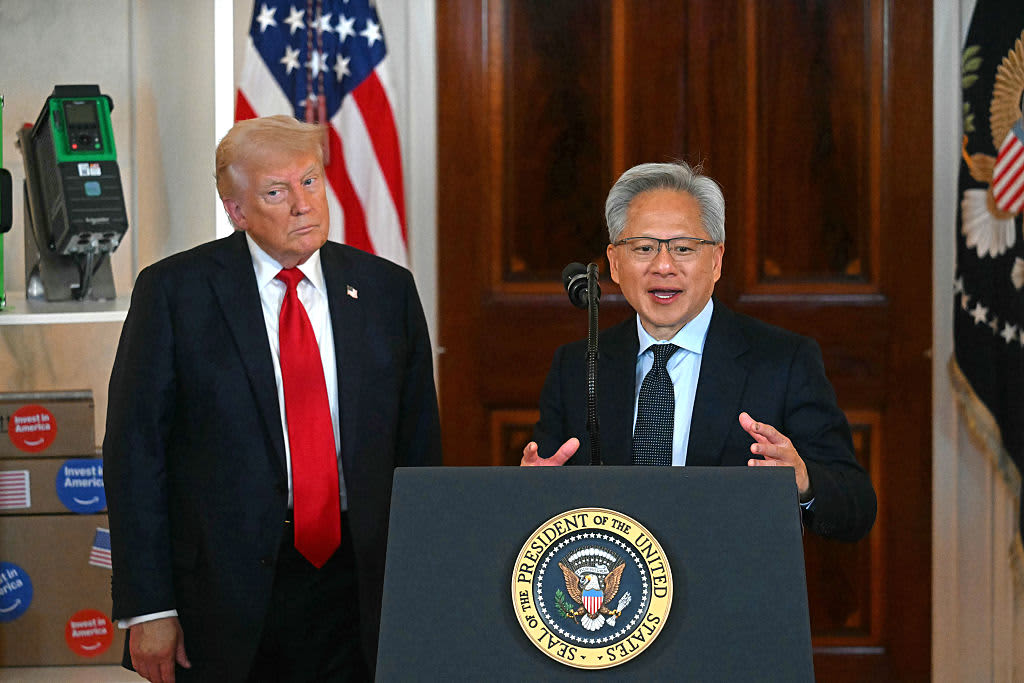
US President Donald Trump said that Nvidia’s most advanced AI processors, known as Blackwell, will be reserved for companies based in the United States. The comment was made in public interviews and on Air Force One and drew immediate attention from industry leaders and allies.
The decision, if translated into formal export rules, would mark a major turn in Washington policy on semiconductor exports. The chips in question power large AI models and high-performance computing systems. That makes them central to the global AI race and to the supply chains that support it.
What Trump Said
The president stated that the most capable Blackwell chips will not be allowed to flow to foreign buyers outside the United States. The statement was clear in tone and scope. Officials will likely follow with new or tightened export controls to put this policy into practice.
Nvidia chief executives have commented publicly since the announcement. Nvidia’s leadership said that the company has not sought specific export licenses for these chips to China and that decisions about access are political and regulatory. Nvidia’s executives said they hope the chips can be sold more widely, but that final authority rests with national policymakers.
The White House and government agencies will need to translate the president’s statement into detailed rules. That process can include clarifying which variants of the Blackwell line are covered, defining acceptable customers and partners, and setting licensing processes. Industry groups and allied governments will watch those steps closely for both technical detail and timing.
Global Strategic Impact
The move could reshape how nations build AI infrastructure. South Korea and other partners have just announced large purchases and plans that rely on access to top-end GPUs. Those deals are now uncertain while new rules are set and reviewed. Companies that planned to deploy tens of thousands of Blackwell GPUs for data centers and industrial AI will need to pause or seek alternative paths.
Limiting exports to China would aim to slow Beijing’s ability to train and run very large AI systems. At the same time, tighter limits could prompt Beijing to accelerate local chip development. That would add pressure to global supply chains and could produce a faster push for domestic alternatives. Analysts warn that cutting access may slow some Chinese efforts but could also produce longer-term fragmentation in the semiconductor market.
For allies and partners, the effect may vary. Some countries that already plan large deployments with Nvidia hardware could be carved out of restrictions or face staged access. That will depend on diplomatic negotiations and how the United States designs its export control regime. The rules may also shape investments in local chipmaking and in new international partnerships.