

Apple dropped the Touch Bar in its laptops after a brief period. The strip first appeared in 2016. It promised new touch controls above the keyboard. The idea looked modern. Not many users changed their habits for it.
Why it launched
Apple aimed to replace old function keys with a new control area. The strip changed to match the app on screen. In a demo, it looked helpful. The strip could show bookmarks in a browser or sliders in a photo app.

Design leaders said the change was forward-looking. They argued that many people no longer used physical function keys. The Touch Bar was near the hands, and it could be useful while typing. The idea was to add context-aware tools that fit each app.
Apple also hoped developers would add special support. The company made tools so apps could show custom buttons. The screen felt slick in demos. That helped create early interest from some users.
Why it ended
Many users found the strip slow to use in real work. Touch typists must look down to find a control. That needs to look slow to people. Physical keys let users act by feel. The strip removed that advantage.
The Escape key was one big example. Users wanted a real Escape key. Apple added a physical Escape key later. That change showed the company had to redo the design to fit real use.
Developers also had little reason to build special support. The Touch Bar was on only a few MacBook Pro models. A developer could not assume many users would see their touch controls. That meant added work for limited benefit.
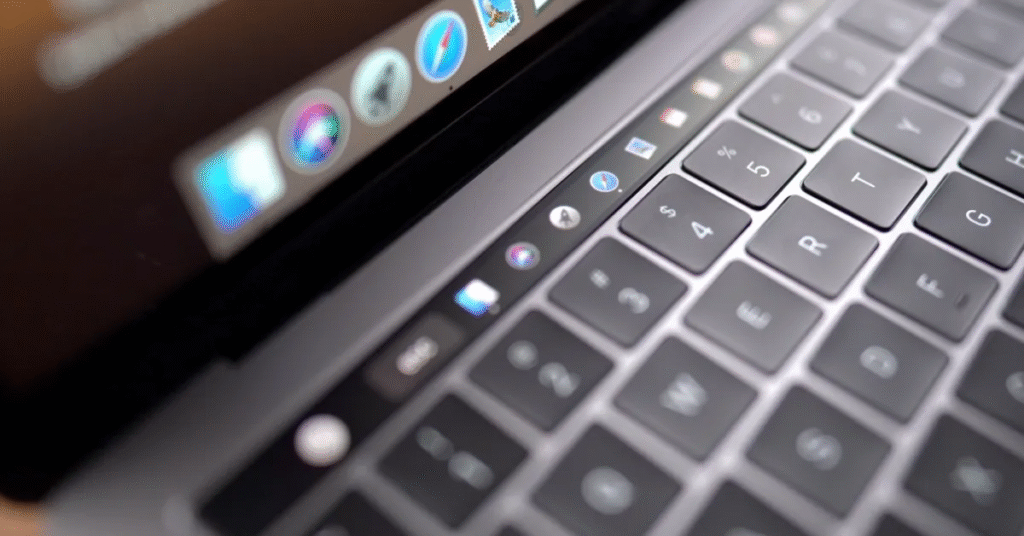
The keyboard that shipped at the same time also had faults. Some users had problems with the keyboard style that Apple used then. Those problems made the new laptops less loved. The Touch Bar had to carry more weight than it could.
Later on, the strip lost track of Apple. It did not see the desktop Macs or the broader laptop model. By redesigning the MacBook Pro in 2021, the Touch Bar was removed. It was also destined that the last model in its line would leave the line in 2023.