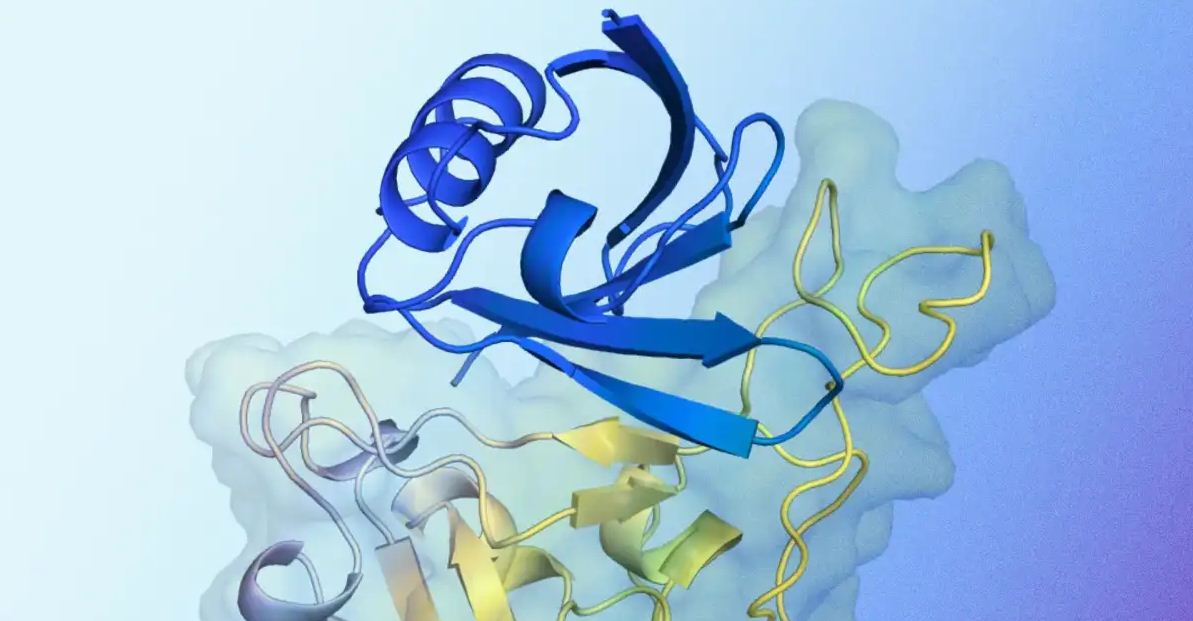

Google’s AI, developed by the company DeepMind, has been studying proteins for years as the first step to intervening in various biological processes. Initially, there was AlphaFold, an algorithm that predicts how proteins fold. Now, AlphaProteo, a new AI, can design proteins that interact with other proteins. This development opens up possibilities for intervening in a wide range of phenomena with diverse medical applications.
Please follow us on Facebook and Twitter.
Biological processes are largely governed by interactions between proteins. Some proteins bind to others, like a key fitting into a lock, and trigger reactions that lead to specific outcomes. We can use proteins to block or enhance these interactions as needed. However, while we understand the effects of these interactions, designing the key from scratch remains a complex challenge.
That’s why DeepMind scientists decided to advance Google’s AI further. They developed an algorithm that can quickly design proteins with strong binding capabilities. So far, most of this work has been done using computer models, but some laboratory experiments have been conducted, and the results have confirmed what the scientists observed on their screens.
The Importance of Protein Binders
For a protein to function properly, it must fold correctly. Even if a protein has all its amino acids, incorrect folding can cause it to lose its functionality. Alternatively, it might fold slightly differently and gain a new function. AlphaFold analyzed this well, but further progress was needed. Now, we need to develop what are known as protein binders.
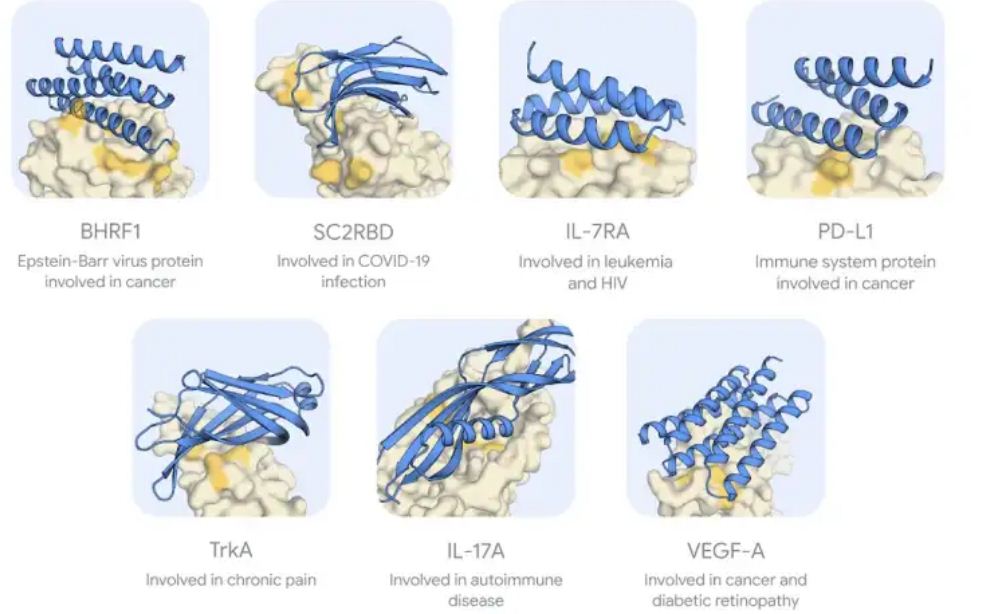
These are small proteins that specifically bind to other target proteins, allowing their functions to be visualized or modified. Traditionally, antibodies have been the most commonly used binders in research. These small proteins attach to other proteins, usually to mark them for attack by the immune system. For example, antibodies can recognize specific proteins of SARS-CoV-2 if it infects us.
Similarly, antibodies exist for many other proteins, even those not related to pathogens. However, it has not always been possible to obtain antibodies that are both specific and stable for a particular function. As a result, other types of binders have been developed over time.
What Does Google AI Do?
Google’s AI, which has been trained on over 100 million pieces of data to create AlphaProteo, uses information from protein binder structures with known functions.
After analyzing this data, Google’s AI can quickly design new binders by considering three aspects: the structure of the target protein, the various binding sites on the protein, and the different possible foldings of the binder.
Once the protein is designed, it is tested through computer simulations to determine if it can bind strongly to the target protein. The results have exceeded the researchers’ expectations.
Milestones Achieved by Google AI
Binders created with Google’s AI can bind to their target proteins between 3 and 300 times more strongly than those made by other methods. Additionally, the AI has achieved milestones that no other algorithm has reached before.
For example, it has found a binder that binds efficiently and strongly to VEGF-A, a protein involved in both cancer and diabetes complications. The AI has also produced several binders that can attach to protein domains related to the infectivity of viruses and bacteria.
Good Results Also in the Laboratory
The results from computer simulations have clearly demonstrated the effectiveness of Google’s AI. However, laboratory testing was also necessary. Some of the binders designed by AlphaProteo were synthesized in the lab, and the real-world results closely matched those from the computer models.
DeepMind has taken another significant step forward. While AI can present many challenges, it also offers numerous benefits. What Google’s AI has accomplished certainly falls into the latter category.