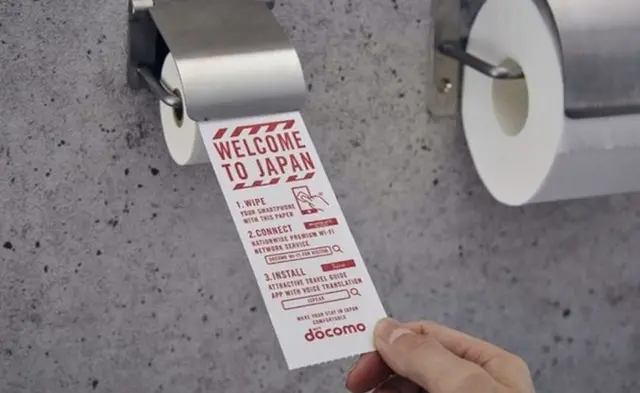

In Tokyo politeness has been programmed into the lights: machines with moving gauges and gentle tones, a polite voice that says to you: remember our next passenger, a quiet mechanical tick of a tiny motor as a little light flickers to life; an app that tells you that the roll has reached thirty-seven percent, and you find out after it is too late that your standard gesture has been measured and moulded.
It is not a satire, but a creation of a purpose. The smart dispensers currently implemented in stations and hotels tally the sheets, notify personnel when inventory is low, and accompany the action of drawing a sheet with jingles and flash prompts that make the process feel a bit followed; the effect of the changes are quantifiable: utilization decreases, waste is minimized and purchases can be cut down – and the outcome of such cuts is the result the system was designed to provide.
Silent Enforcers in the Stalls
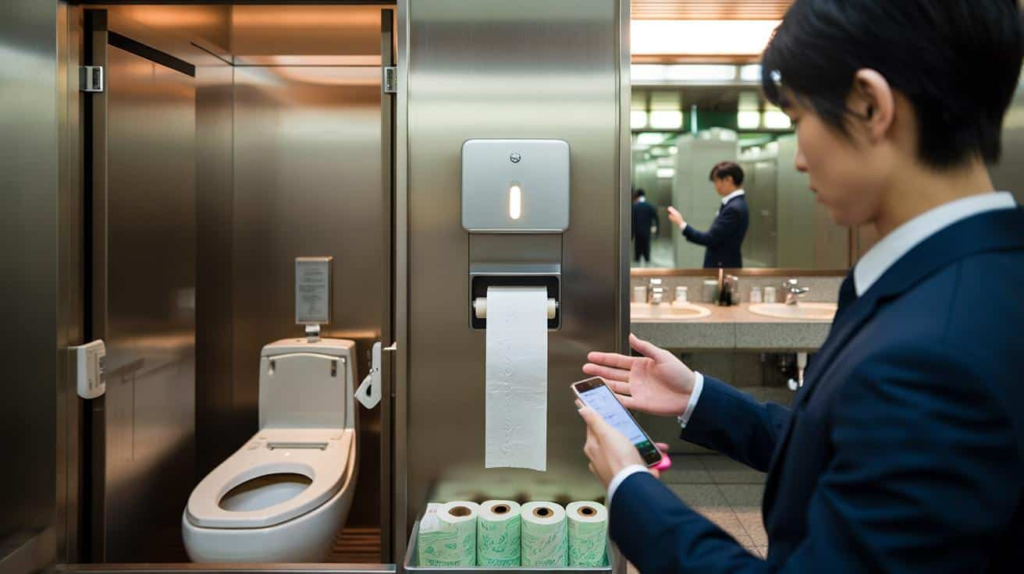
A sensor will not shout at you. A sensor will not shame you in public. A sensor will whisper. A sensor will ping the cleaning team when a roll dips below a set level. That ping turns into a graph. The graph turns into a chart. The chart turns into a weekly huddle. The huddle turns into a contest. Staff compete to keep green lights in every restroom all day. It reads absurd when it is said out loud. It works when the math is shown.
Some places add stickers that say two or three squares are enough. That is a small line of text. It is not a law. It is a standard. It is a social jab with a smile. Other places tweak the physics. They change the roll width. They change how freely it spins. A small friction at the hub makes a long yank feel clumsy. People pull less without thinking.
Some venues went the other way. They bought bit better paper. Thicker sheets. People felt safer. People used fewer units. The numbers went down. Managers stared at charts and called it design. Engineers call it optimal friction and sheet integrity. Marketing calls it sustainable stewardship. Staff call it a new kind of scoreboard. The rest of the world calls it weird and clever and a little bit intrusive.
The move by Japan was a lesson learned in 2020. The initial months of the COVID-19 pandemic caused panic buying and empty shelves at the supermarket, which made institutions aware of how easily supply chains are broken, and that there is a supply, budget, and forest to lose. It was found rational to create a tracking of toilet paper as a consumable: the statistics can indicate precise spikes by the floor and hour, and transform waste reduction into a hard KPI.
Little Data Nudges Big Behaviour
If this sounds like social engineering, it is because it is social engineering. The tone is friendly. The method is playful. The effect is powerful. You get polite prompts inside private spaces. You see a dashboard in the cleaning office. You see a graph that says usage by hour. You get a monthly email that says your floor is a paper hog. You try harder.
This will not be sold as surveillance. The vendors promise that stalls are not tied to people. The data is anonymous. The sensors count rolls, not faces. That may be true. The line between aggregate data and personal pressure is thin. An office that logs shame scores can still send smell messages. A building manager might brag about a team that kept every restroom above twenty percent all week. The brag becomes a ritual.
Design and gentle pressure are the tactics. Signs that appeal to the next passenger. Slight resistance in the roll. Better paper that gives a feeling of sufficiency. Soft background music in some stalls and silence in others to test the effect. Each small change is a neat experiment. Each experiment ships a result. The results remain in dashboards. The dashboards become policy.
There is a practical side too. Staff get fewer surprise shortages. They do not have to walk every floor to check every roll. They clean more and restock at better times. The hotel in Kyoto credits the system for lower cost and a new sense of pride among staff. The manager says the team treats it like a game. That is a good line. That is also a neat way to make people manage waste without telling them to be stingy.
What does it mean for you? It means that a private action is nudged by design and by data. It means your small choices are now visible as numbers. It means polite voice prompts tell you to trim your habit. It also means that small gains in cost and waste may come at the cost of a small friction in a private moment. Some will accept that trade. Some will not.
Design in Quiet Motion
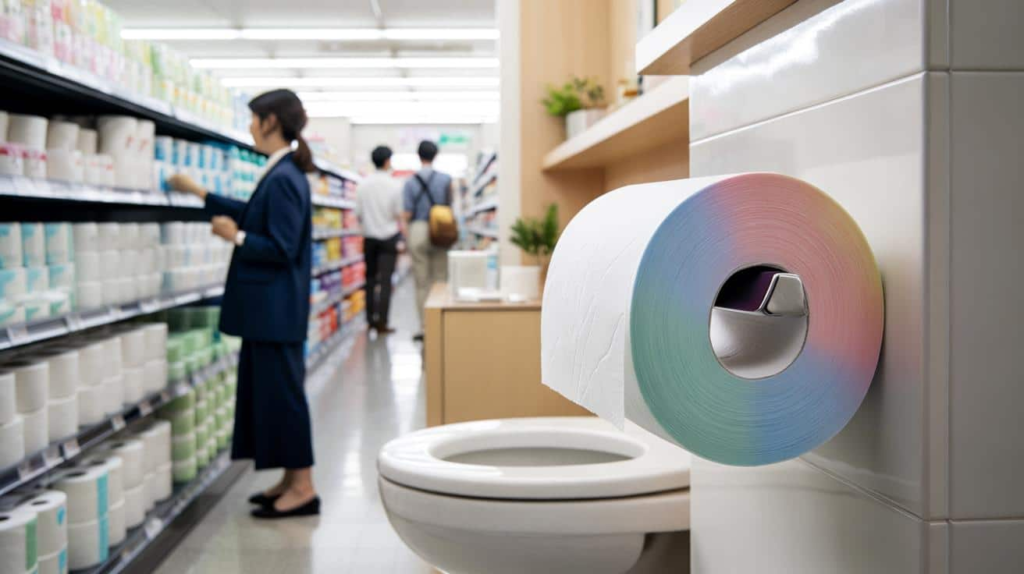
This is not a Tokyo-only trend. This is observed in silence in the case of airports and corporate complexes abroad. Small nudges, as the concept of waste reduction, are attractive to finance teams. The concept that a toilet roll is a data point is appealing to operations teams. The fact that individuals would reform without a law appeases designers.
So the jingle plays. The light flicks. The dispenser counts. You pull less. The math looks good. The purchasers of the sensor remit the bill. The hotel posts the chart. The staff high-fives. The Green Board of Environment is greener. The traveler narrates to his friend the pleasant voice. The friend laughs and writes a video. The world leans a little towards intelligent objects that observe minor habits.
It is cute, and it is creepy at the same time. It is just a little push that can make us learn not to waste. It is also a small motor that brings about individual acts visible to systems. Other systems will be learning off this. Other nudges that can fit in dashboards will be there. Other silent experiments will be performed that no one will request. That is what design will be in the popular world. It is small. It is quiet. It is effective.
In case you go to Shinjuku, seek the whirr. Hear the voice which bids you sacrifice a square. Smile at the cheeky charm. Ask yourself whether you would have such a sensor at home. Answer honestly. In case you are content with a cordial monitor that will save a tree and a cent, you will be okay. When you treasure an immeasurable intangible moment, you will bristle. Anyhow, you are going to be listed on the roll.