

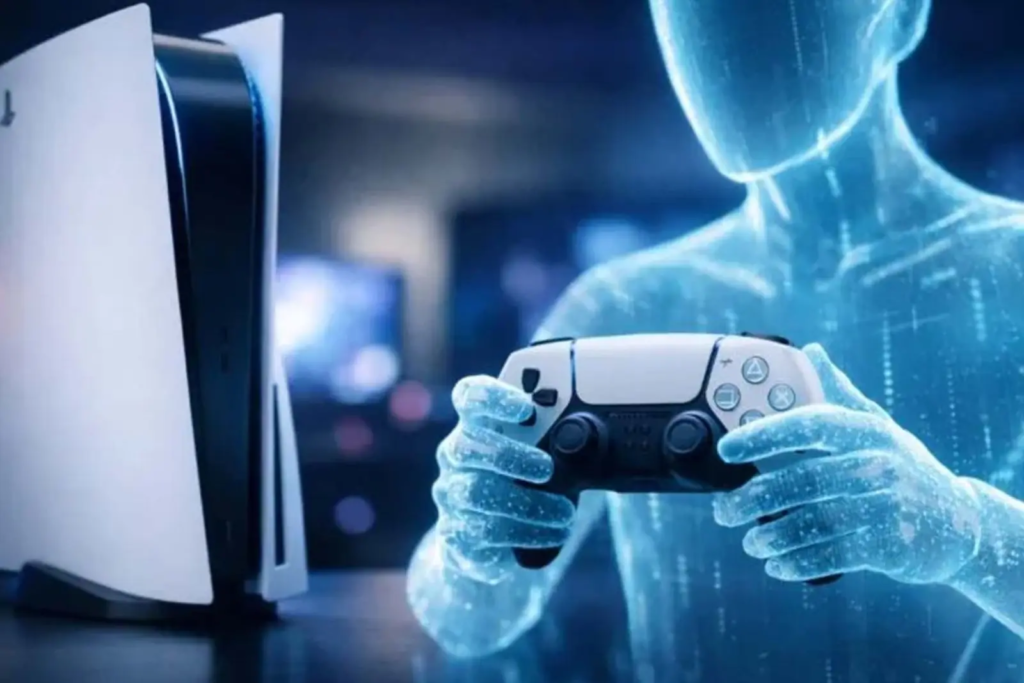
Sony filed a patent for an AI-generated ghost that can show players how to solve puzzles and can even play parts of a game for them. The patent describes a system trained on gameplay footage that tracks the current scene and then offers help through a phantom character. The feature can speak to the player, demonstrate controller inputs, or take control and finish the task. This is not science fiction. It is patent paperwork made real.

What Sony Patented and How the Ghost Would Work
The patent names modes such as story mode, combat mode, exploration mode, and a full game mode. The paper also sketches a complete mode that actually finishes tasks for a player and gives the player credit for the result. The ghost can be called with a button press, a gesture, or a spoken prompt. The system learns from existing footage on the internet and adapts to the player in real time. That is the patent description, and it means a machine could do the hard work for you.
The design reads like a hands-on tutorial that learns from every YouTube video and every stream. The ghost appears in your play world and walks the route or fights the fight. The idea echoes existing features such as PlayStation Game Help while aiming for a new level of automation and personalization. Sony proposes both passive guidance and active play for you. The company frames this as a solution for complex modern games and as a possible accessibility tool. Critics note that the same tech also opens a door to new revenue streams.
Why Players and Developers Should be Nervous
This is a tool that can fix hard parts and sell you the fix. Games have always offered help. Walkthroughs and video guides are not new. This ghost is different. It can live inside the game and change how players feel. When a machine can earn your progress, you stop learning the trick. Players lose skill, and studios lose the value of design that teaches through play. That dynamic creates a clear path for monetization. Companies can sell subscriptions or single-use credits to skip pain and buy a ghost to do the work.
There are also data questions. The patent suggests training the system on existing videos and gameplay traces. Using that data means scraping public streams and player clips. That could raise copyright and usage concerns for content creators. Privacy questions follow when AI learns from player behavior and stores profiles over time. The ghost that remembers will not only show you how to jump a river. It will learn what you cannot do and may offer that as a service. That is a business model and a danger for player agency.
Patents Shape Futures
Game culture also faces a reputational shift. The pride of learning will collide with the convenience of buying wins. Some players will cheer the convenience, and some will mock the purchase. Developers will be asked to choose between a design that teaches and add-ons that sell shortcuts. The result could be a market where the first-run cost is only the start, and the real revenue comes from selling ghost hands to the impatient. That future is not absurd. The patent is a map toward it.
This patent is not a promise that the ghost will ship next year. Patents document ideas and protect options. Sony has filed many patents that never became products. Still, the filing matters. It shows where a major platform sees value and where the industry might follow. Players who care about skill and studio identity should pay attention. The ghost can be framed as an accessibility win, and that case has merit. The same system can also be framed as a cash machine that sells victory. The choice is a business choice wrapped in code.