

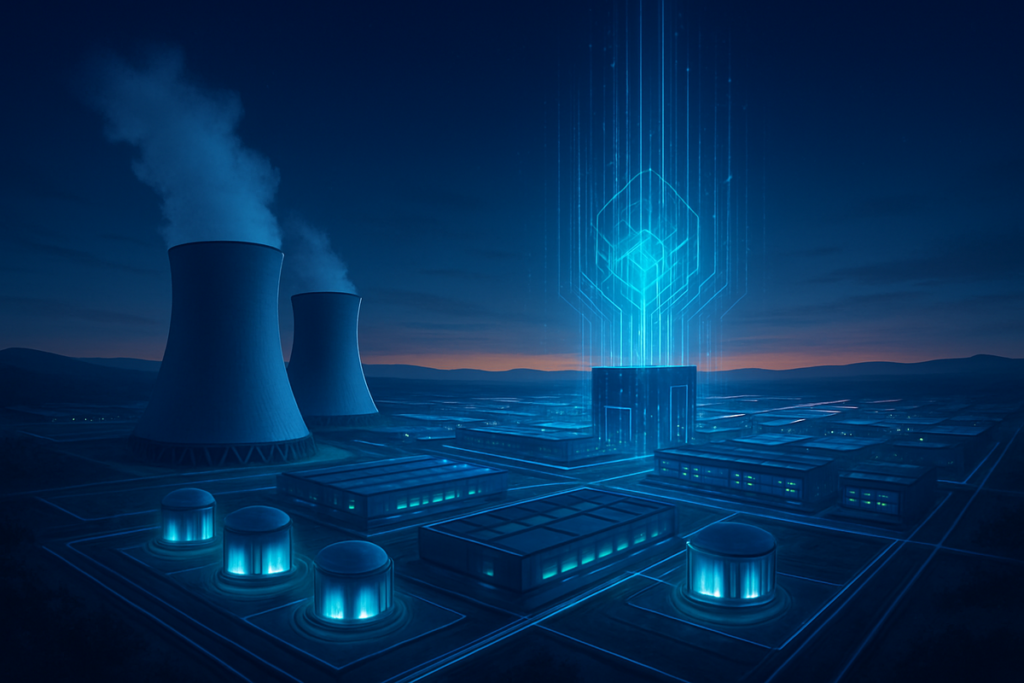
Meta has signed a set of long-term agreements that together could deliver more than six gigawatts of nuclear power to support its growing fleet of AI data centers. The company says the deals secure energy for projects that include the 1 gigawatt Prometheus build in Ohio and the larger Hyperion capacity planned for Louisiana.

Power Purchase Details
Under the agreements, Meta will buy power from three partners. Vistra will supply more than two gigawatts from existing reactors such as Davis Besse and Perry and from other sites in the PJM region. The company will also back next-generation small modular reactor programs through deals with Oklo and TerraPower that could deliver additional capacity in the 2030s. Taken together, the arrangements could reach roughly six point six gigawatts of nuclear capacity over the next decade.
Why the company is doing this is simple to state. Large AI workloads require steady and large amounts of electricity. Meta is building Prometheus to run high-performance AI models, and it has said that even larger sites are in planning. Securing long-term clean power helps the company manage cost uncertainty and reduce pressure on local grids as it brings very large compute clusters online.
Data Center Impact
The near-term benefit is practical. Vistra’s existing plants can deliver power while the small modular reactors in development will phase in later. That staged approach lets Meta start up its first major facility this year and scale further as new nuclear plants come online. The deal with Vistra was designed to align availability with Prometheus and to reduce reliance on short-term backup generation while preserving grid stability.
Industry and market effects are already visible. Stocks related to nuclear projects saw gains when the news broke. Analysts note that big corporate buyers enable financing and construction of new plants and can speed the commercial case for advanced reactor technology. According to Bloomberg, the agreements also show a clear industry shift as cloud and hyperscale operators seek long-lived firm power for energy-intensive AI services.