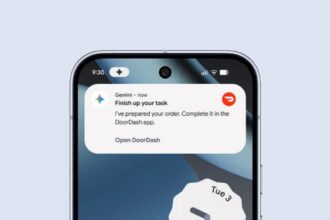

Google has begun using its Gemini model directly inside Maps to make driving safer and more helpful. Drivers can now talk to Maps and get answers about stops on the route. They can also ask about traffic and parking without typing. The feature aims to keep attention on the road while letting Maps handle routine questions and simple tasks.
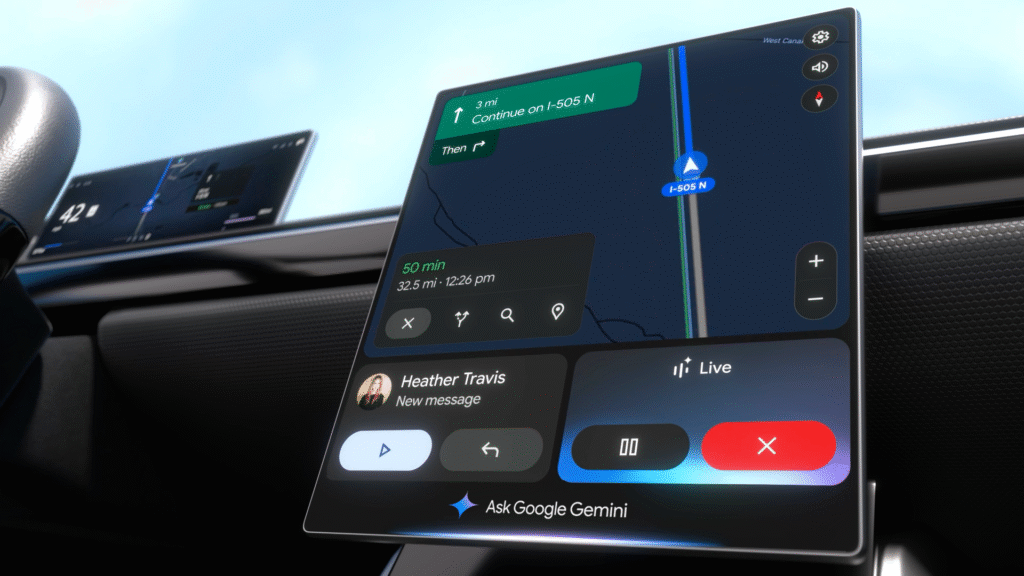
This update also makes turn guidance easier to follow. Instead of only saying a distance to a turn, Maps will point out a visible landmark such as a gas station or a shop. Google matched Street View images with place data to find landmarks that are easy to see while driving. That database covers about 250 million places.
What is changing
Gemini will let people ask several follow-up questions in a single conversation. For example, a driver can ask for a cheap dinner near their route and then ask about parking options. Maps keep the context and answers step by step. This is meant to be conversational and hands-free.
Maps will also accept reports from drivers about incidents on the road. Users can tell Maps about a crash or a stalled vehicle. The app will then warn other drivers on the same route. Google calls this proactive traffic alerting.
Another new option joins Google Lens to Gemini. Point the camera at a storefront or a sign. Then ask Gemini what the place is and why people like it. The combination is meant to help people learn about their surroundings without long searches.
How it works
Google cross-checks millions of place records with Street View images to find reliable landmarks. The system looks for places that are visible from the road and that drivers can spot early enough to make a safe turn. That way, the guidance uses words drivers can see in real life as they approach a junction.
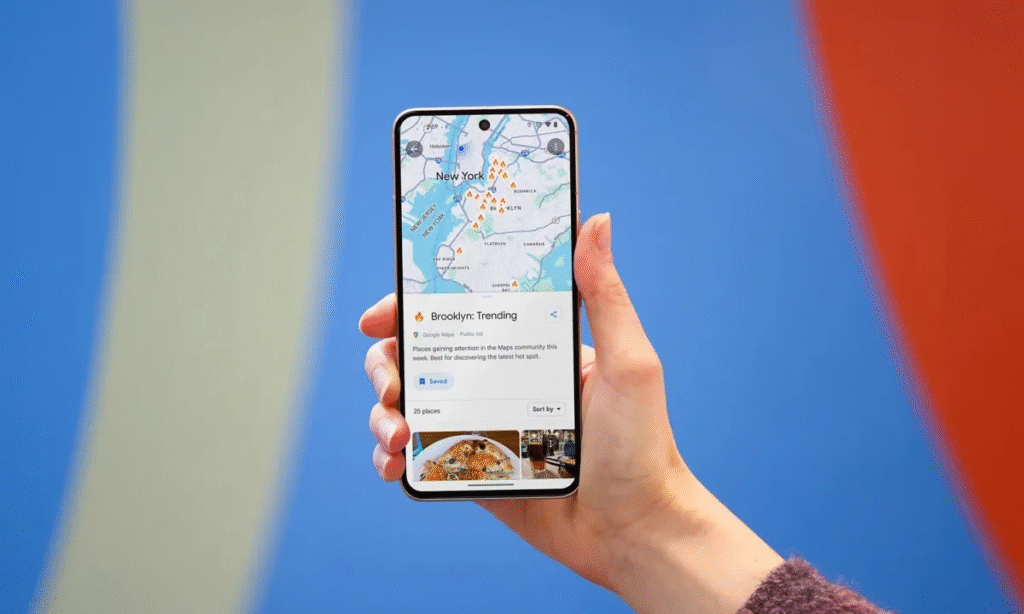
Gemini in Maps is in both iOS and Android. Google indicated the implementation would occur in the next few weeks. Android users in the United States are the first ones to have traffic alerts. Android Auto support will be subsequent.
What drivers should know
The system is meant to eliminate the necessity of taking one’s hands off the wheel. Drivers are still advised to maintain eye contact on the road and observe local legislation in using devices. The feature is an assist. It does not replace safe driving.
Google is still testing the new navigation cues and reporting tools. The company warns that the feature is experimental and may make mistakes. Users who opt in to test features can try the new agent in Maps now.