

Pinterest has introduced new features that enable users to regulate the extent to which AI-generated imagery is shown on their feeds. The transition comes after widespread complaints among users regarding the increase in AI content on the site. The new settings allow individuals to decide what topics they would prefer to see less AI content, and they would come as Pinterest makes its AI labels more prominent.
New personalization controls
Pinterest will put the new options in the Settings area under Refine your recommendations. Users can choose to reduce AI-generated images in categories that often show such content. The initial list includes beauty art, fashion, and home decor. The company said it will add more categories over time based on user input. The rollout starts on the website and on Android. Pinterest said the iOS release will follow in the weeks ahead.
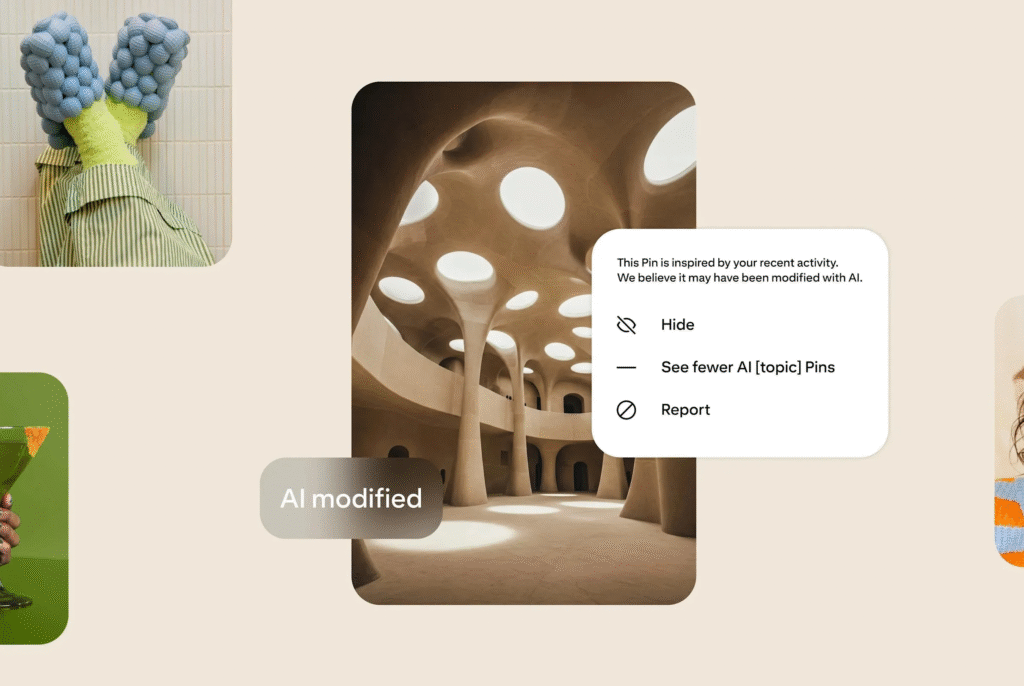
Pinterest already places a Gen AI label on images that are generated or modified with AI when the system can detect it through metadata or classifiers. The label appears on the close-up view of a Pin. Pinterest also said it will make these labels more visible so that people can better judge what they see. The company invites users to send feedback about AI images while they browse. That feedback can refine what a person sees over time.
The change responds to a wider concern about the growing share of generative AI content on the web. Pinterest cited academic work that estimates a large share of online material now includes machine-produced text or images, and it said that trend makes clear labeling and user choice are needed. Critics have used the term AI slop to describe low-quality automated content that fills feeds and makes discovery harder for human creators. Media outlets and creators reported strong user pushback earlier this year.
How to adjust
To change the new setting, go to Settings, then Refine your recommendations. Choose the categories where you want less AI-generated content. You can update those choices at any time. While you browse, tap the three-dot menu and send feedback if an image seems AI-generated and you want to see less like it. Pinterest said these signals will be used to refine each person’s experience.
Why this matters
Many people use Pinterest to find real ideas they can make, buy, or use. When feeds are filled with AI images that show items that do not exist or that cannot be made easily, the site becomes less useful for planning projects or shopping. Creators also lose reach when automated content crowds search results. Platforms that host creative work must balance new tools with clear controls for users and protections for creators. The new tools from Pinterest aim to give people control and to protect the quality of what they find. Coverage from multiple outlets shows that this is an industry-level issue, not just one company’s problem.
Detection of AI content is not perfect. Pinterest uses metadata checks and machine classifiers to find AI-generated or AI-modified images. Some AI images lack useful metadata. Classifiers may miss or mislabel content. The company allows for appeals and user reports so that errors can be fixed. Over time, better detection and clearer provenance will help platforms and users. For now, the new controls place power in the hands of each user so they can shape the content they see.