

Google is expanding Opal, its feel-based no-code app maker, to 15 additional countries. The move follows the app debut in the United States and aims to put simple app building into more hands. Google calls Opal a vibe-based tool. It turns text prompts into mini web apps and offers a visual editor for fine-tuning. The new launch makes Opal available in Canada, India, Japan, South Korea, Vietnam, Indonesia, Brazil, Singapore, Colombia, El Salvador, Costa Rica, Panama, Honduras, Argentina, and Pakistan. Google says the editors are faster and the debugging tools are clearer.
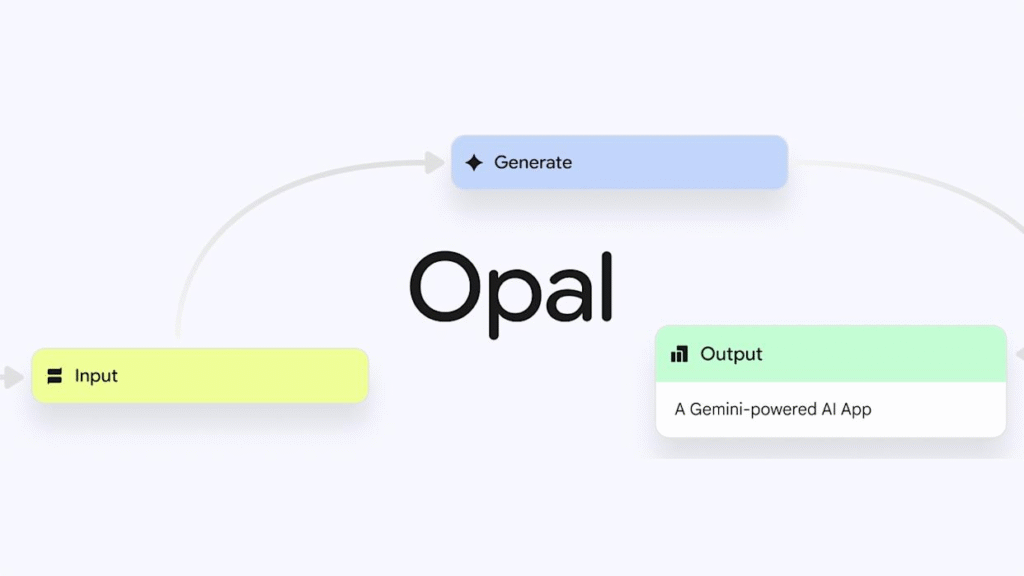
Opal is designed to let creators and teams make useful tools without writing code. Users type what they want. Opal builds a working flow. The builder shows each step with inputs and outputs. Creators can open any step to view or edit the prompt. Parallel steps are also supported in the tool to make the complex workflows quicker. Google claims that it is very easy to correct the mistakes since the editor displays the locations of the mistakes.
Where Opal Expands
The country list reflects regions with large creator communities and strong mobile use. Google hopes local creators will make tools for local languages and local needs. Opal apps can be published to the web and shared by link. People who test an app need only a Google account. Google is also improving Opal performance, so new apps appear faster. The company says creating an app now takes a few seconds in most cases. These changes are meant to lower the friction between an idea and a usable prototype.
The expansion also places Opal among a set of rivals that include visual design and prototyping tools. Companies such as Canva and Figma have added features that make simple app-like experiences possible. Opal tries to stand out by pairing Google models with a step-based editor. This makes it easier to layer image generation, data lookups, text generation, and other tasks in a single workflow.
How Opal Works
Opal uses a mix of Google models to generate app components from plain language. The editor shows each stage as a tile that you can open. You can tweak the prompt for a stage or add a new step. The new debugging tools let users step through a workflow to see intermediate outputs. Errors appear inside the editor, so users do not need to guess where a problem lives. Running steps in parallel also speeds up workflows that require many independent operations.
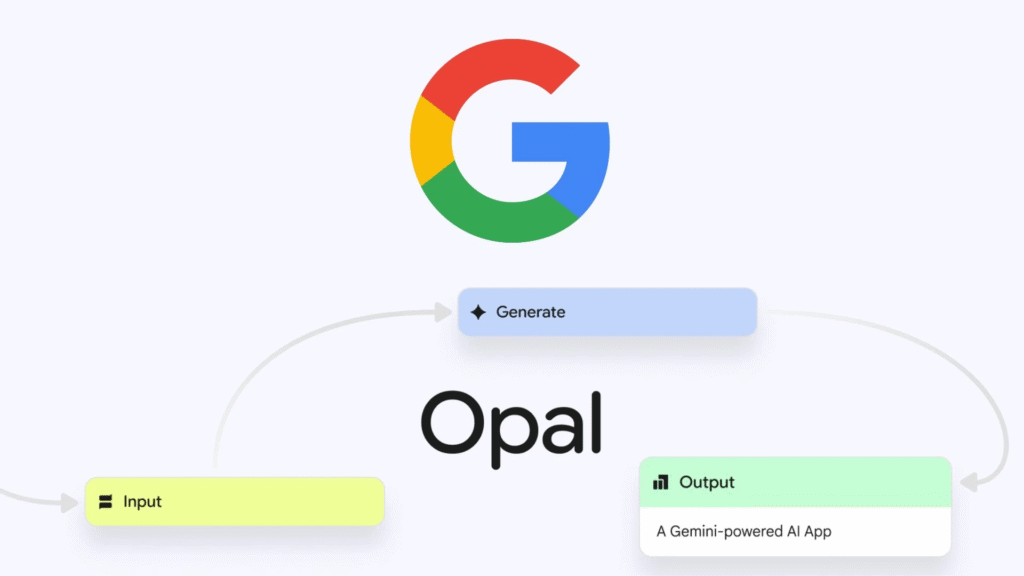
The app supports sharing and simple publishing. That makes it useful for quick prototypes, class projects, and small business tools. Some early Opal apps were simple games and party utilities. Other apps were practical helpers for tasks such as photo editing and content ideas. Google says it saw a surprising number of advanced apps from early adopters. The company added features in response.
Privacy and safety will matter as Opal spreads. Google asks creators to be transparent about any data the app collects. The editor includes controls for limiting data access and for showing error context without exposing private data. Google also plans to monitor published Opal apps for harmful content and to block apps that violate rules.