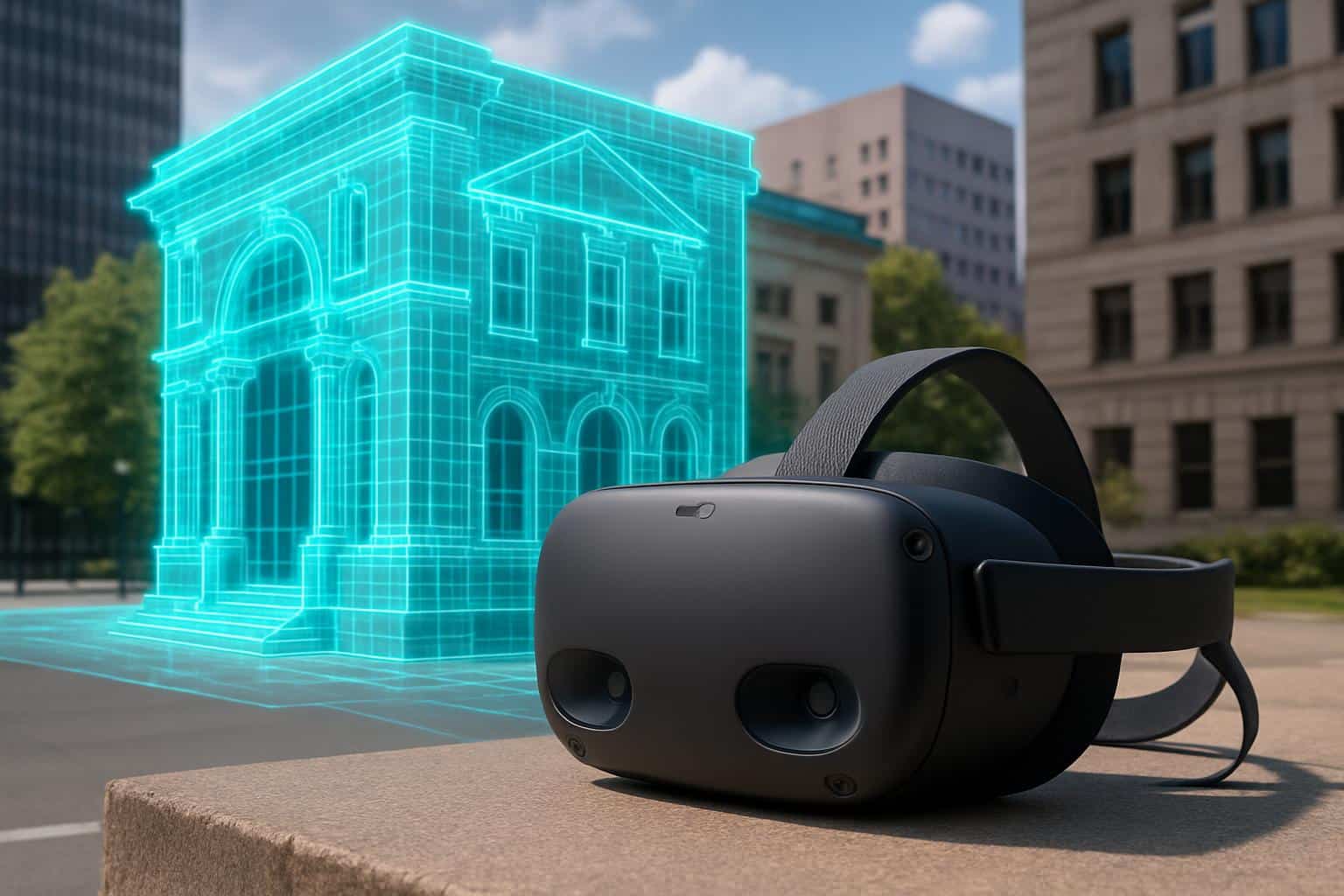

Meta introduced Hyperscape Capture to let people turn real rooms into detailed virtual spaces. The tool is in Early Access for Quest 3 and Quest 3S users in the United States. A user can scan a room in a few minutes and then wait as cloud rendering converts the capture into a photorealistic scene that can be visited in VR. Meta says the capture step is fast, but the rendering can take several hours.
How Hyperscape Works
The system uses advanced rendering methods and cloud processing to build lifelike scenes. Users scan a room with their Quest headset. The headset uploads the data to Meta cloud services. The company then uses techniques that include Gaussian splatting and streamed rendering to make the scene look realistic inside a headset. At launch, the feature supports single-user captures, and private sharing will come later. Meta also limits access to users aged eighteen and up in the Early Access rollout.

Launch and Impact
Meta showed examples of Hyperscape worlds that include celebrity spaces and public arenas. The company highlighted Gordon Ramsay’s kitchen, Chance the Rapper’s House of Kicks, and the UFC Apex Octagon as featured scenes. At first, users will not be able to invite others into their captures, but Meta says private links and multi-user support are planned for future updates. The rollout is gradual, so not all eligible users will see the option immediately.
Hyperscape ties into other announcements at the Connect conference. Meta also highlighted new VR games, expanded streaming partnerships, and smart glasses with a heads-up display. The combined moves show Meta pushing both hardware and software toward shared and immersive media experiences. Industry observers note that the feature will test how creators move real spaces into VR and how streaming and social features follow.
Creators and headset owners should expect a period of refinement. The capture to render flow will need strong cloud bandwidth and robust privacy controls. Meta says it will add sharing and collaboration features over time and will refine safety and content policies as the feature reaches more users. Early testers can expect more updates and clearer controls as Meta learns from real use.