
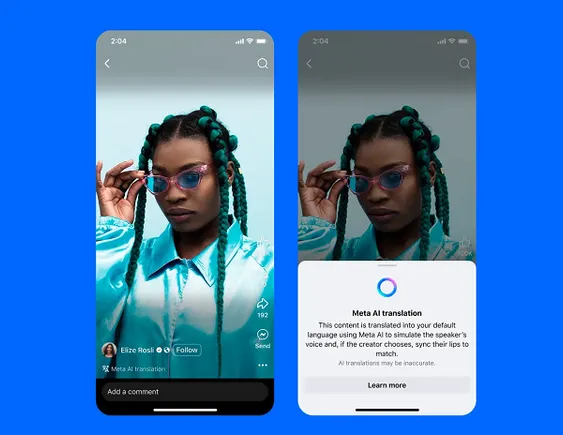
Meta is expanding a tool that translates creator voices on Facebook and Instagram. The feature uses AI to keep the creator’s voice and tone. It can also line up the translated audio with the creator’s lip movements. At launch, the feature covers English and Spanish. Creators can turn the option on before they post a reel. According to Meta, the feature is available where Meta AI is offered. Reports and posts from Meta say the rollout begins for public Instagram accounts and for Facebook creators with at least one thousand followers. Sources include TechCrunch and Meta creator documentation.
How the translation tool works in practice
When a creator chooses the option, the reel is processed by Meta AI. The system generates a dubbed audio track in the target language that uses the creator’s voice signature. Creators can preview the translation before they post. They can also turn lip sync on or off. Meta shows a notice on translated reels so viewers know the audio was created with Meta AI. Creators who do not want translations to appear for them can adjust settings in the app.
Who can use the feature right now
Meta has set simple thresholds for access. Public Instagram accounts qualify globally where Meta AI is active. Facebook creators need one thousand or more followers to use the feature. The company plans to add more languages over time. Facebook creators also have a separate option to upload up to twenty custom-dubbed audio files for a reel using the Business Suite. That upload option lets creators add translations before or after posting.
What creators should do to get the best result
Meta recommends simple steps. Face the camera when you record. Speak clearly. Avoid covering the mouth. Keep background noise and music to a minimum. The feature supports up to two speakers in a single clip. Creators should make sure speakers do not talk over each other. Doing these things helps the AI produce a cleaner translation and a better lip sync match.
Why this matters for creators and audiences
The feature can widen the reach. Translating a reel can help creators find viewers who speak other languages. Meta adds a new metric in Creator Insights that shows views by language. That metric helps creators track how translations expand their audience. For creators who want to grow in new markets, this tool can save time and lower the technical barrier to cross-language content.
Privacy and transparency steps
Meta shows a label on translated reels to make clear that a reel uses AI-generated audio. Creators see the translation before the reel is public and can reject it. Viewers can also choose not to see translated reels in selected languages. Meta notes that the feature is only available where Meta AI is offered. The company has not published a long list of future languages at this time.
How the launch fits into Meta strategy
The new translation tool builds on Meta’s efforts to add AI features to core apps. The rollout follows the feature preview at last year’s Connect. The move aligns with broader company changes to reorganize AI teams and product focus. For creators, the feature is one more value add that may help content cross borders and keep more viewing and ad activity inside Meta apps.
Early limits and future questions
At launch, the supported language pair is English and Spanish in both directions. Meta will add more languages, but it has not given a timeline. The feature supports two speakers only. The tool also depends on Meta AI availability in each market. Creators who need full manual control can still upload custom-dubbed audio through the Business Suite.
How to turn the feature on
Record your reel as normal. Before publishing, tap the option that says translate your voice with Meta AI. Choose the target language. Toggle lip sync on or off. Preview the translated reel. If you approve, tap share now. If you prefer to add custom audio, use the Business Suite tools for uploads.
What creators and platforms will watch next
Creators will follow user response and the Insights by language data. Agencies, as well as brands, will observe the performance of the translated reels and whether they will reach new customers. Hosts of creators will experiment with the moderation and enforcement of translated work. The relation of data on audio and voice signatures in processing will be monitored by regulators and privacy activists. As Meta accumulates more data, it will probably improve models and add language support.