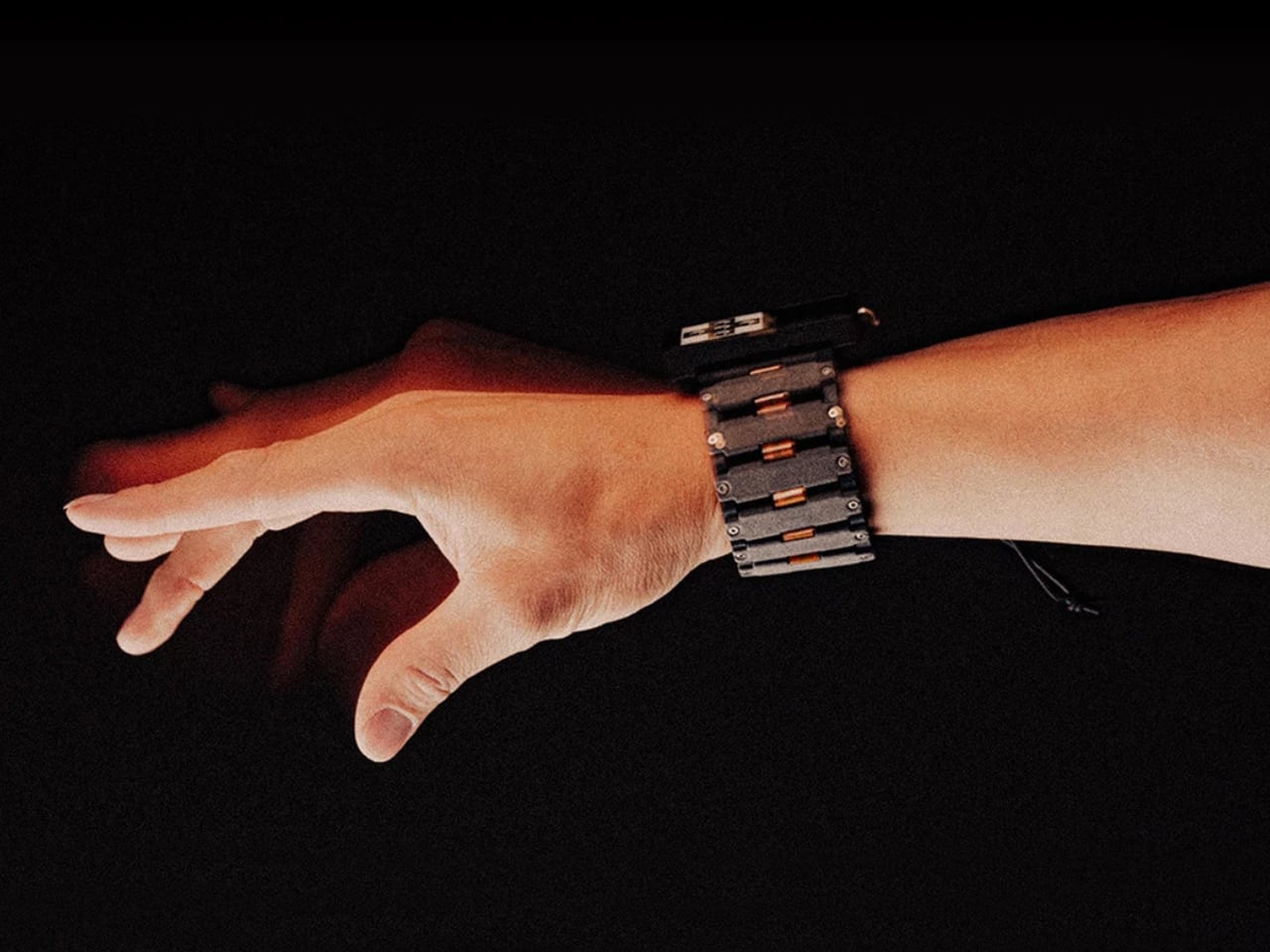

Meta Reality Labs has unveiled a wearable wristband that translates hand gestures into computer commands by sensing tiny electrical signals from muscles. This gesture‑controlled device can move a cursor to open applications and even let users write messages in midair as if they were using a pencil.
How the wristband reads muscle signals
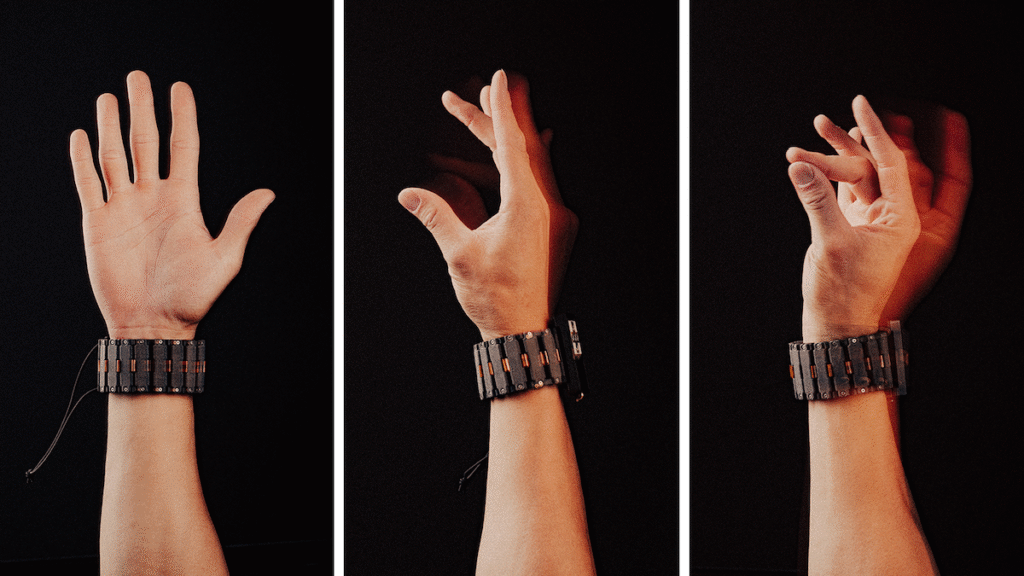
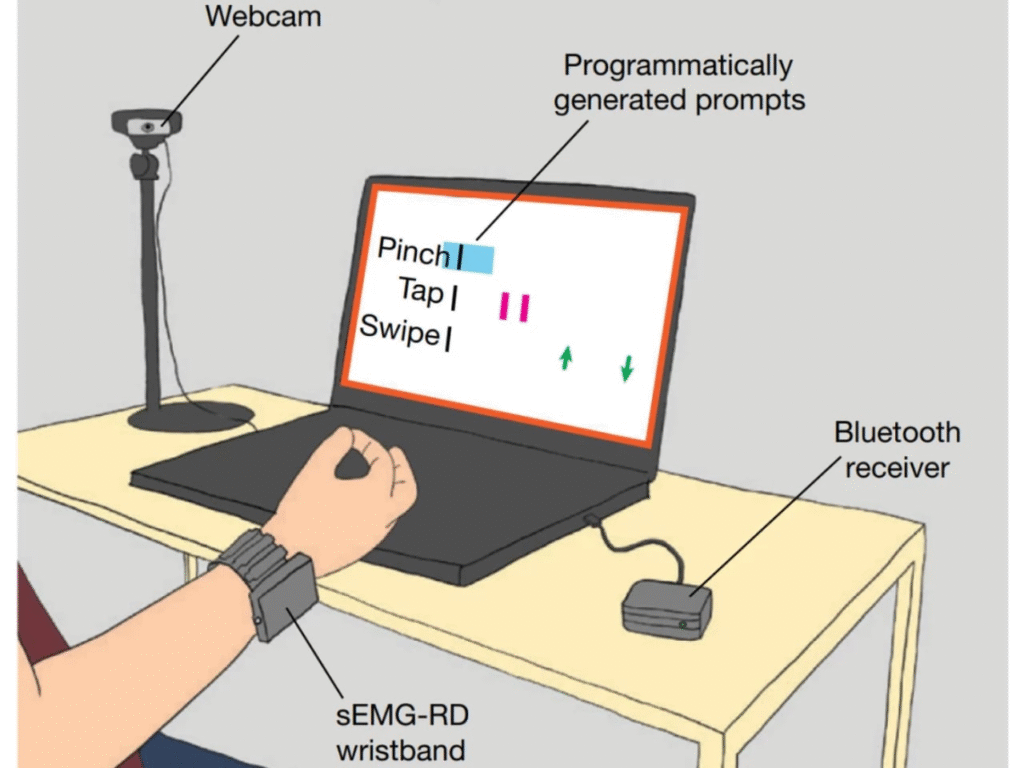
The wristband uses surface electromyography or sEMG to detect electrical impulses generated when muscles contract. Sensors on the band pick up these signals before the hand actually moves. A machine‑learning model then decodes the intended action in real time. The study published in Nature described the study results on the ability of sEMG data to forecast cursor movement and text entry with great accuracy.
Collaboration with Carnegie Mellon
Meta has linked up with Carnegie Mellon University to conduct a trial use of the device with individuals who have spinal cord injuries. Even persons whose hands are totally paralyzed still manage to generate weak muscle activations. According to Professor Douglas Weber of the CMU Neuroscience Institute, these faint signals enable the band to decode and convert performed gestures that are intended to come out as computer inputs.
A non‑invasive alternative
Current approaches to hands-free computer control go as far as brain implants, such as Neuralink, to EEG headsets. Neural implants are surgical and medically risky. EEG devices are placed on the skull, yet they measure faint brain electrical activities, which tend to curtail speed and accuracy. This is unlike the sEMG wristband, which merely encircles the forearm and records the signal in a higher frequency and reliability without the need for going under the scalpel.
Early results and user experience
In early trials, users could perform common tasks such as moving a pointer, clicking buttons, and drawing letters in the air. One participant with limited finger movement wrote a short email using midair writing gestures. The system achieved over ninety percent accuracy in mapping gestures to commands after a brief calibration period. Researchers highlight its potential to restore independence in daily digital tasks for people with motor disabilities.
Next steps and future impact
Meta is looking to improve the comfort, battery life, and wireless connection of the wristband before wider field testing is conducted. An integration with augmented reality glasses, which will allow a complete hands-free control of virtual interfaces, is also being considered by the company. As the technology matures, it might provide a viable and convenient measure that millions of people can use to communicate with computers without contact.
The gesture-controlled wristband by Meta is a sign of good things to come when it comes to Computer Inclusion. It exploits the opportunity to tap muscles (non-invasively) on the skin surface, demonstrating a new way of allowing individuals to control digital devices using only their intentions, even in the absence of invasive surgical interventions or clunky devices.