
We pull out our phones and we scroll until our eyes glaze. The new film makes that habit look like an act of mass self harm. The movie is loud and rude and sharp. It laughs at our playlist lives and then it asks us to explain ourselves. The result is a comedy that feels like a roast and also reads like a warning.
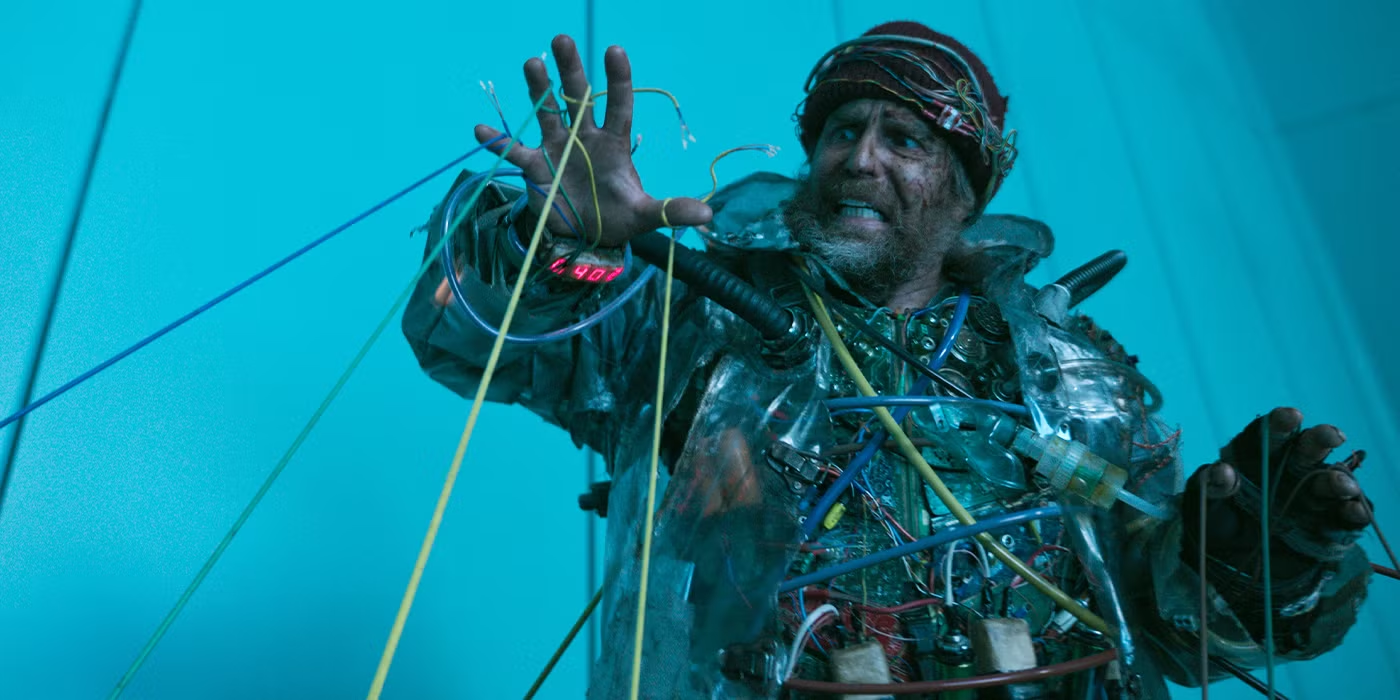
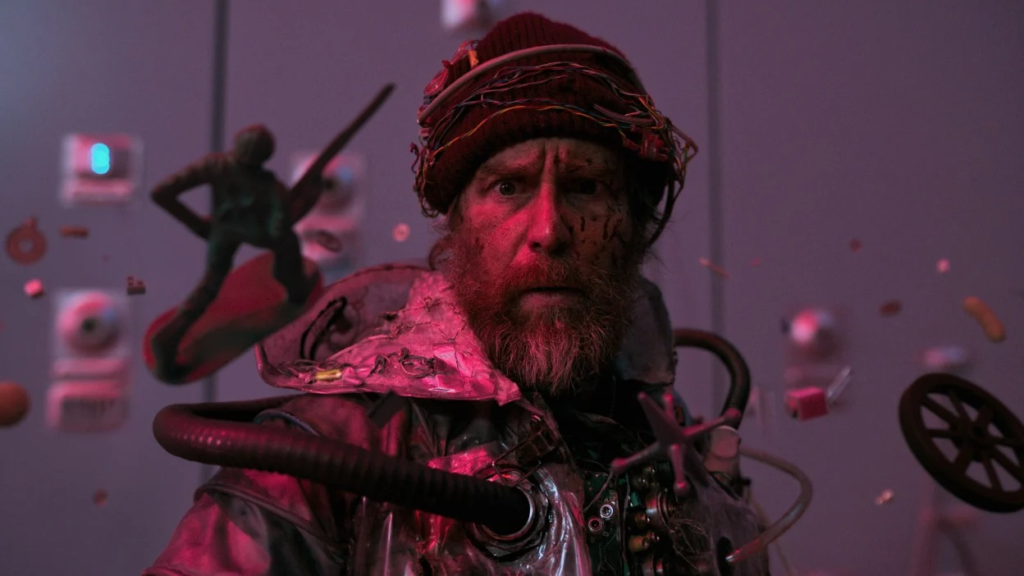
The film called Good Luck, Have Fun, Don’t Die flips the usual robot panic into a carnival. The main man claims he came from the future. He straps on a junkyard time travelling suit and threatens to blow a diner up if the crowd does not listen. The act sounds extreme. The film makes it funny and bleak at once. The star is Sam Rockwell. The film director is Gore Verbinski. They both understand how to make spectacle urgent.

Robots are Cartoon Villains and Humans are the Punchline
This movie does not fear being rude to robots. They look silly. They make bad choices. They are fussy props of our own lazy mistakes. The film turns so called AI dread into a parade of absurd monsters. These creatures feel like the worst generative AI slop come to life. They are dramatic and shallow and then they self destruct.
At the same time the film asks a harder question. Who taught the machines to be so boring and mean? The answer is us. We fed them our short clips and our click bait and our cheap scripts. The film shows how the tools that were meant to help have been made into soft cages. People click and buy and repeat. The machines mirror us and then do it faster.
The writing is messy on purpose. The plot hops between a diner hostage scene and flashbacks of teachers lost in a classroom signal. The film names the pain. One character cannot hold a job because wireless signals make her ill. The script treats that idea like a mirror for our broken life with screens. The movie does not preach. It mocks and then it nudges.
Sam Rockwell is the Weirdo Hero We Did Not Expect
Rockwell sells the oddball logic. He is frantic and tender in the same breath. He is the only player who carries the film when the plot swerves into chaos. He makes the time traveller feel like a man who has tried the same pitch too many times and who cannot invent new lies. His intensity keeps the nonsense anchored.
The supporting cast adds human weight. The film gives them small lives that feel true. A mother with deep grief. Teachers who cannot reach students. A woman allergic to Wi Fi. These scenes play as real stakes. When the movie slows down it lands hard. The laughs keep arriving but the film can also hurt.
A Movie About Our Shame That Also Wants to be a Circus
The director revels in visual excess. The camera races. The frames pop. One moment the film looks like a fevered comic. The next it is quiet and strange. That restless style suits the message. The movie uses loud graphics and frantic edits to show how attention is stolen. It lets the audience feel the theft.
The monsters take form from generative slop. The film uses that idea with flair. The creatures seem built from bad viral ideas and cheap video edits. That choice makes them funny and telling. The film shows how easy it is to manufacture terror and to sell it back to us.
Why This Film Lands Where Other Warnings Have Not
Many cautionary works about AI feel like lectures. This film does not lecture. It nabs the absurdity and makes the whole thing look foolish. The result is both bleak and playful. The movie forces us to laugh at the shape of our lives. That laughter can be a bruise.
If you want a film that will make you grin and then check your phone and then hide your phone under a book, this is the film for you. It is not subtle and it does not want to be. It wants to show what we have made and then hold the mirror up and wait for us to squirm.
Where This Sits in the Wider Argument About AI
This film joins a pile of recent stories that push back against the gleam around generative tools. It is a push back done with jokes and gore and stage props. It does not solve the problem. It does not pretend to. It asks us to look at the mess we helped make and to admit the human part of the blame.