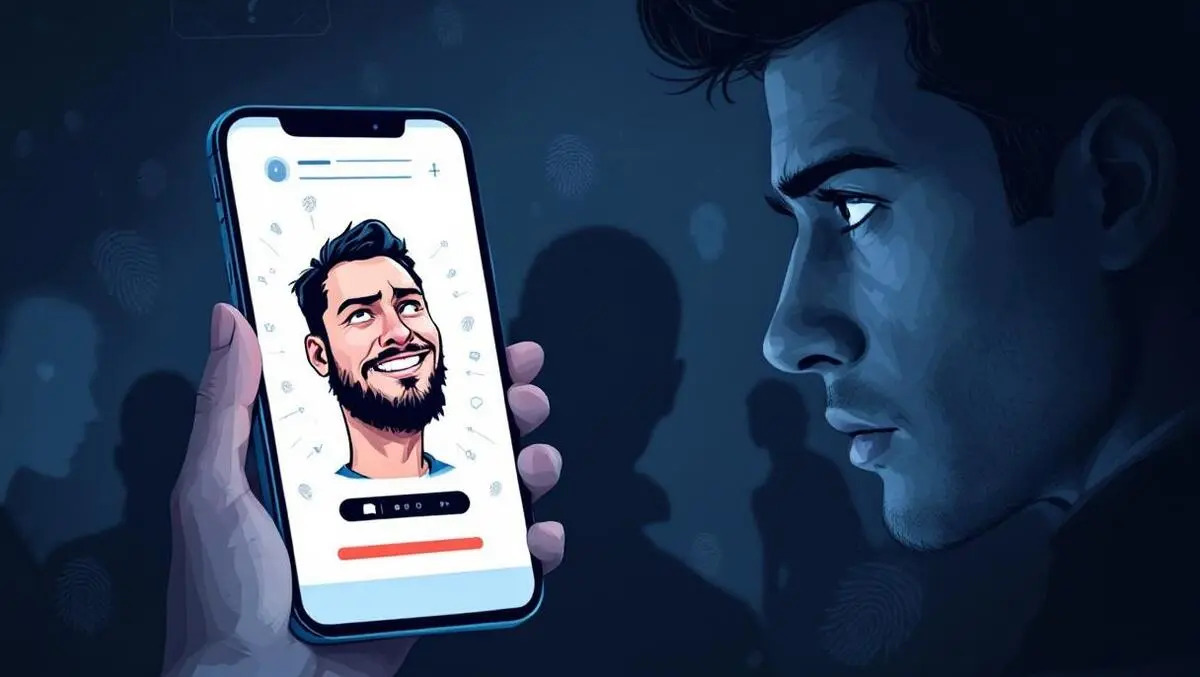

What looks like harmless fun may be the internet’s newest gift to digital criminals. The viral caricature trend built around ChatGPT has flooded social media feeds with bright, cartoon-style portraits that claim to show everything the chatbot “knows” about you. The actual situation is not as adorable as security experts claim.
Users are uploading selfies, company logos, job titles, and personal information, and getting the AI to transform them into caricature-coloured images. The outcomes appear smooth and light-hearted. However, cybersecurity specialists warn that these images can function as ready-made identity kits for fraudsters.
Bob Long, vice president at Daon, told Euronews Next that people are effectively handing over a visual blueprint of themselves. He argued that the trend should raise red flags because it packages personal branding into a single, highly shareable image. In his view, users are doing the hard work for scammers.
From Cute Cartoon to Criminal Toolkit
When a photo is uploaded into an AI system, it is not just converted into a cartoon. Cybersecurity consultant Jake Moore said that the system processes and extracts data points. These may be the facial features, expressions, background information, and even hints to location or workplace. That information may be stored for an unknown period.
Long added that uploaded images can be retained to improve AI image generators. While OpenAI states that not every photo becomes part of a public database, patterns from user content may be used to refine models. That means the image does not simply vanish after the caricature is created.
Charlotte Wilson, head of enterprise at Check Point, warned that a single high-resolution selfie can enable realistic deepfakes or fake social media profiles. She explained that selfies allow criminals to move from generic scam emails to convincing impersonation attempts. Instead of sending random messages, scammers can now present a believable digital twin.
The concern is not theoretical. Data breaches happen. If sensitive images and personal details were exposed in such a breach, criminals could combine facial data with job titles and company branding to craft targeted fraud campaigns.
The Real Risk Behind the Viral Glow Up
The trend encourages users to share more than just a face. Many prompts ask people to include their employer, city, or professional role. That combination turns a playful caricature into a personal data bundle. Fraudsters are contextually dependent. The more information they provide, the more plausible their lies are.
Experts suggest that what is seen on the uploaded pictures should be restricted. Avoid showing work badges, uniforms, office backgrounds, or logos. Crop tightly. Keep backgrounds plain. Share less about job titles and employers in prompts. Review privacy settings before participating.
OpenAI provides a privacy portal that allows users to opt out of data training by selecting a do not train option. Text conversations can also be excluded from model improvement through settings. Under European Union law, individuals can request deletion of personal data, although some information may be retained for fraud and security purposes.
The caricatures may look harmless. They may even feel empowered. However, in a digital world driven by data, every image has value. When a selfie becomes a stylised badge of identity, it also becomes a potential asset for someone else.