

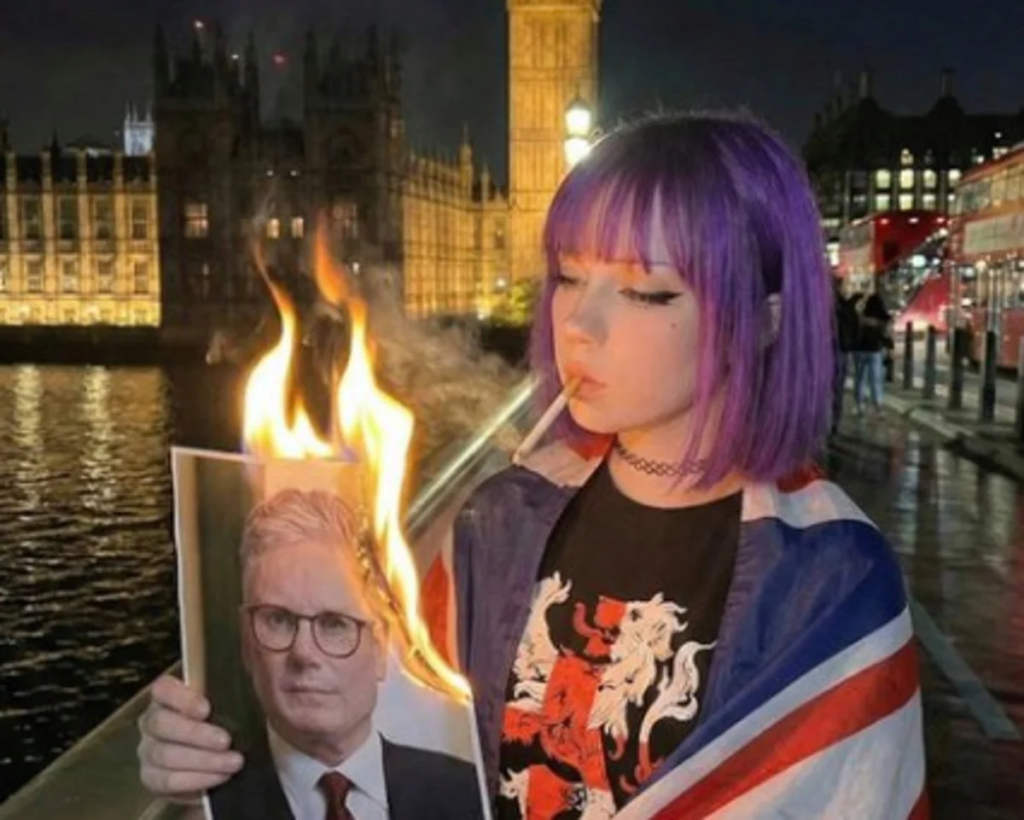
They made a goth schoolgirl to stop hate. That videogame avatar has walked straight into the jaws of the internet and come back wearing a union flag. The character is Amelia. She was designed by a classroom project. The aim was to warn young people about the pull of extremism. The result is a global meme that spreads xenophobia and money making.
This is not a cautionary tale about a single mistake. It is a proof of concept for how fragile control is when the public internet meets cheap artificial intelligence. It is also a story about opportunists who saw cash and built a machine that runs on attention.
From Classroom Demo to Viral Mascot for Haters
The character first appeared inside Pathways. Pathways is a simple interactive game meant for schools. The game is funded in part by the UK Home Office. It aims to help teachers spot risky online steps. Amelia was a fictional college student in that program. She was supposed to be a warning. The creators wanted pupils to see how easy it is to be drawn into extreme groups. They wanted to encourage discussion in class.
Instead, a fringe account on X turned Amelia into a template. That account pushed images and short clips. The posts went viral. The meme took off on January 9 and then accelerated. Analytics by Peryton Intelligence show the spread. At first there were a few hundred posts a day. Within a short time, the count hit many thousands per day. On one day Ameliaposting reached over eleven thousand posts on X alone. The content varied. Many images are silly. Many are toxic.
People with far right views embraced Amelia. So did provocateurs who aim to stir outrage. So did crypto promoters. The combination made a perfect toxic loop. A character that was meant to teach ended up being remixed into hateful slogans. Teenage aesthetics and sexualised art made Amelia oddly appealing to an audience that eats shock and mockery. In short, the meme had a cheap engine and many skilled drivers.
Money, Memes and the Meme Coin Grifters
This stunt is not just nasty. It is profitable. The Amelia meme spawned an Amelia coin. Some users tried to cash in. Reports say that groups on Telegram discussed ways to inflate token value. Industry experts called it monetisation of hate. Matteo Bergamini of Shout Out UK warned about that fast move to profit. He also said his team faces threats and hate mail after their game design was ripped into a new life. Threats to creators and to teachers are real. That cost is not trivial.
According to the analysts of the Institute of Strategic Dialogue, the meme has a limited but a powerful audience. The audience will primarily be young men that enjoy edgy content and trolling. In this case sexualised art and nostalgic British iconography were blended into a simple package. The meme is easy to remix. It crosses languages and platforms. That made it spread beyond the original domestic context. An ironic detail is that official counter extremism work designed to help students ended up giving the far right a free design brief. The creators never intended that.
The whole affair shows how fast disinformation ecosystems can pivot. A small group can take a public asset and turn it into a cash machine and a recruitment tool. That pivot is not a technology failure alone. It is also a failure of design choices and of planning for reuse and abuse. The public internet rewards reuse. The first mover on a meme is the brand. The second mover is the profiteer.
What the Creators and Defenders Say
Shout Out UK defended the original project. They said the game was designed to be used with teachers and lesson plans. They stressed that the tool was never meant to stand alone as a viral product. They said that misrepresentation drove a lot of the backlash. Prevent, the government programme, says it diverted thousands from violent ideology. The Home Office referred to the programme as a targeted tool for specific local risks.
Researchers who watch online harms said they are not surprised. A small and focused set of people can weaponise almost anything. The Amelia case is striking only because the original asset came from an anti extremism effort. The reaction by audiences and by some media also shows how a meme can be rebranded into myth very fast.
Independent monitors such as Peryton Intelligence and the Institute for Strategic Dialogue have tracked the spread and noted the mechanics. They also warned that the next wave will be even faster and cheaper. The tools that generate these images are now in many hands. That lowers the cost of entry for bad actors. The public has to learn that design and security choices in public projects now matter for culture and for safety.

Amelia Saga as Warning
This episode is a mirror. It reflects many trends that are not limited to one country. First, the tools to make scary or silly content are widely available. Second, the people who profit from outrage are patient and small in number. Third, counter measures lag behind culture because policy work is slow and the internet moves fast.
Schools are in a bind. Teachers must use up to date resources while avoiding giving malicious actors material they can weaponise. Policy makers must also ask a blunt question. What responsibility does a funder have when its material gets coopted? The short answer is that some duty exists. The longer answer is that rules for reuse should be built into grant contracts and into design choices. That means thinking like a security engineer while one makes a lesson plan.
Platforms also take a hit. Social services that host content at scale must build systems that spot coordinated meme pushes. They must also stop monetisation routes that reward organised amplification. That is a hard problem. It requires cooperation across companies and across borders.
The Amelia saga is not just a freak show. It is a warning. It is also an invitation to act with more craft and more humility. The internet will keep making jokes and villains. Public institutions must design with the full weight of that context in mind. If a classroom character can be repurposed into a global propaganda mascot and a token pump then the next time a public project launches, critics will ask less about the brief and more about the possible weaponisation. That outcome may be the most useful lesson of all.