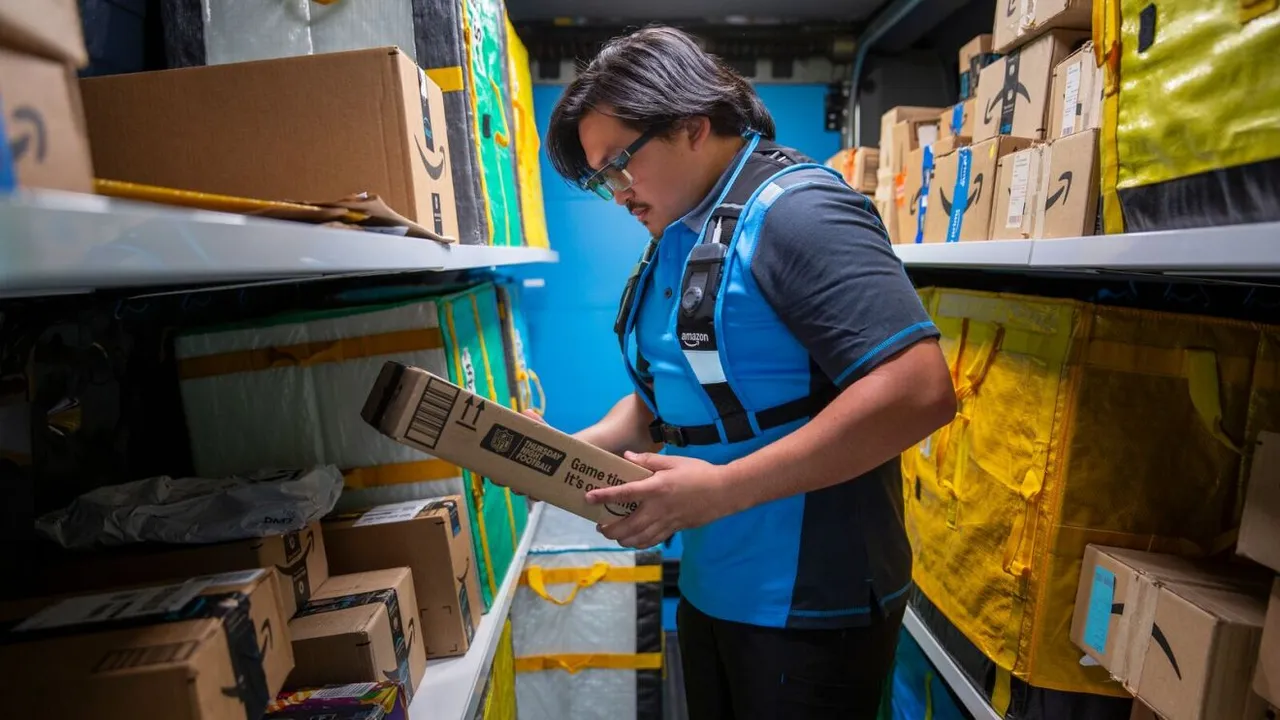

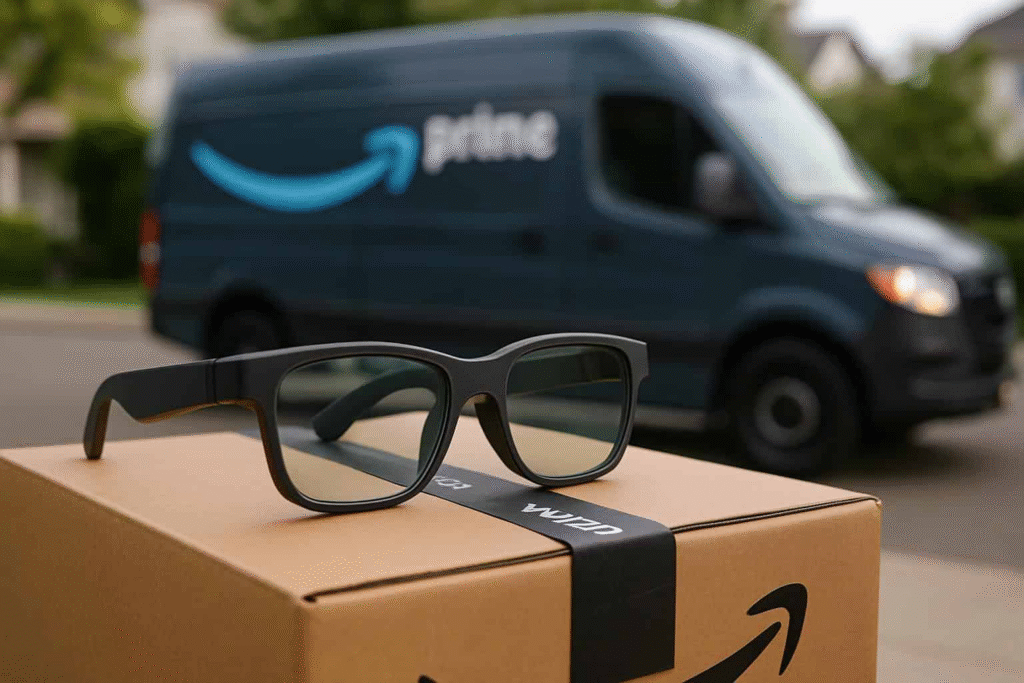
Amazon announced new AI-powered smart glasses for its delivery drivers to make the last mile work easier and safer. The glasses show directions and delivery tasks in a driver’s field of view. They let drivers scan packages and capture proof of delivery without reaching for a phone. Amazon said the system uses computer vision to highlight hazards and to help drivers find the right package in the vehicle.
The company also revealed a robotics system and an AI operations tool at its logistics event. Amazon said the robotics system can work with people to pick and sort items. The firm claimed that the AI tool will provide managers with more insight into operations in warehouses. Such announcements belong to greater involvement in accelerating the deliveries and decreasing the number of repetitive activities of workers.
How the glasses work
The glasses pair with a small controller worn on a delivery vest. The controller holds a swappable battery and a dedicated emergency button. When a driver parks the vehicle, the glasses wake, and they guide the driver to the package in the vehicle and then to the delivery address on foot. The display shows turn-by-turn walking instructions, and the camera can capture delivery photos automatically. Amazon said the glasses support prescription lenses and lenses that adjust to light.
Amazon built the system with drivers who tested early prototypes. The company said it optimized the software with input from hundreds of drivers and delivery partners. The glasses are optional, and Amazon said they plan to provide them at no cost during trials. The aim is to save time on each stop and to reduce distractions from using a handheld device while walking and handling packages.
Trials and concerns
Amazon said the glasses are now in trial with delivery teams in North America and that it will refine the design before wider deployment. The company highlighted future features such as defect detection to help prevent wrong deliveries and pet detection to spot animals in yards. Amazon also described hazard alerts and low-light adjustment as improvements that will roll out over time.
The rollout raises questions about safety, privacy, and worker experience. Advocates and privacy experts often worry that camera-based wearables can increase monitoring. Amazon said the system was designed to help workers and that it will offer controls and training. It will be important for Amazon to publish clear policies about data retention and access as trials expand. Independent oversight and driver input will shape how the technology is used in practice.
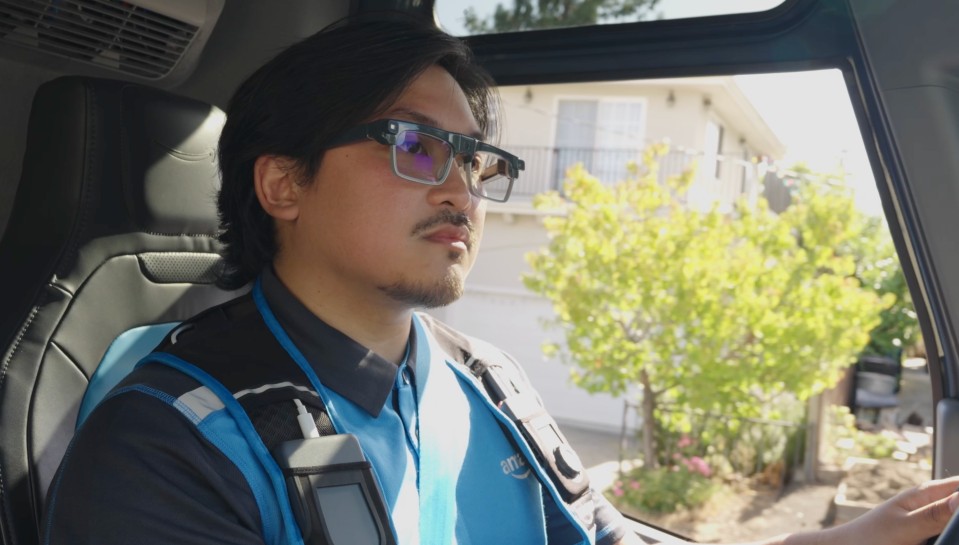
Amazon reported that some drivers saw meaningful time savings during testing. The company said pilots showed efficiency gains that could reduce route time and speed deliveries. Faster deliveries have the potential to reduce costs and enhance customer experience, but the result will be related to real-world conditions and the extent to which the technology is widespread. It will be observed whether the glasses will work to decrease fatigue or if they will complicate everyday work shifts.
What Amazon announced at the same event also matters. The Blue Jay robotic arm and the new AI operations tool are meant to speed warehouse work and reduce repetitive physical tasks. Amazon said these systems can coordinate with employees to pick and sort items faster. The company positions the glasses as one piece of a larger reworking of how goods move through its network.