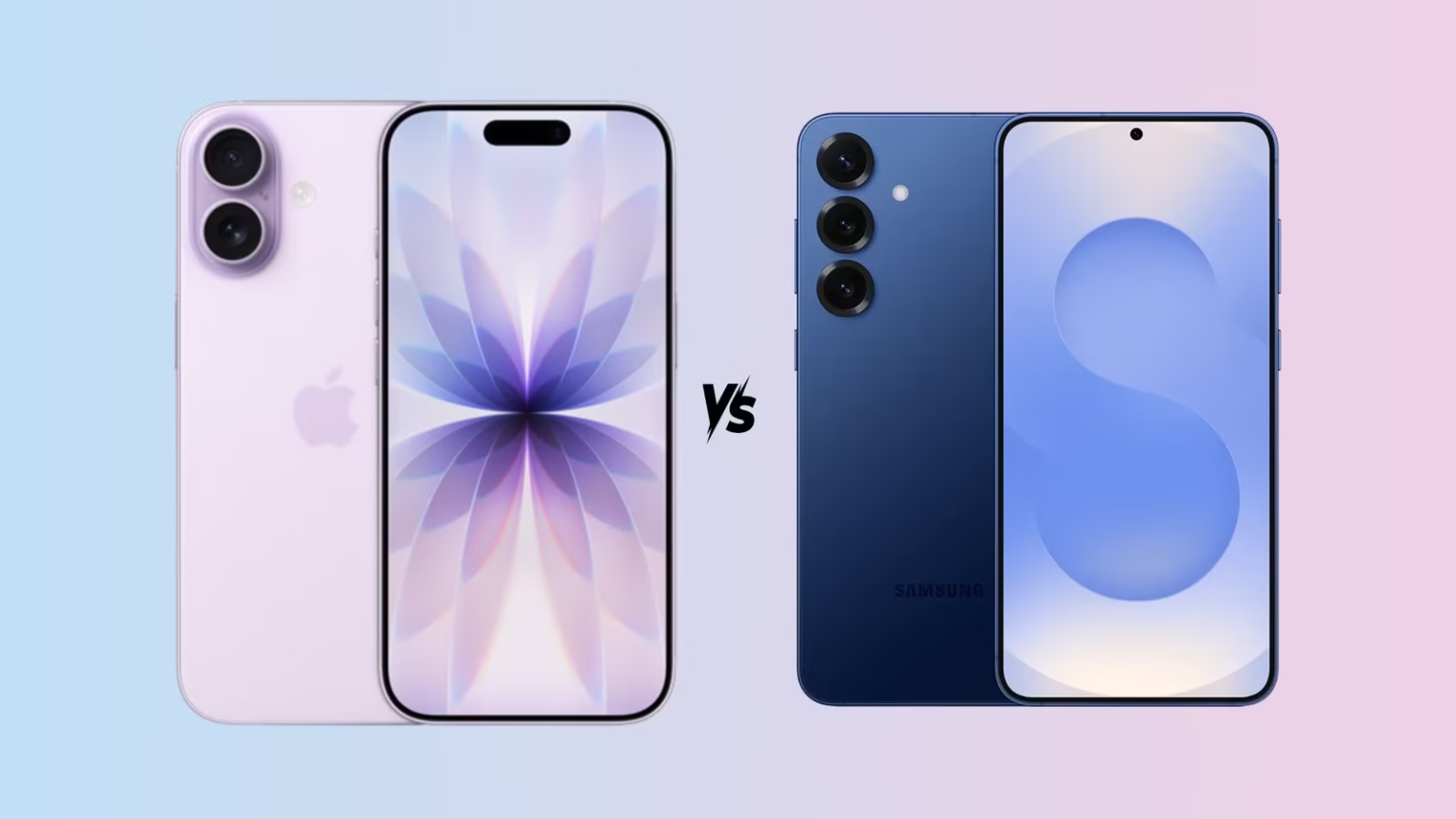

Apple and Samsung have pushed their newest chips into a close race. Early benchmark results put Apple A19 Pro and Samsung S25 silicon very near each other in real-world tests. These numbers give the first public view of how the new phones compare on raw performance.
Performance Snapshot
Geekbench entries and reporting show iPhone 17 Pro results around 3,895 in single-core and about 9,746 in multi-core tests. That is a clear jump over last year, and it places Apple near the top of recent charts.
Samsung flagship phones running the Snapdragon 8 Elite for Galaxy show mixed results depending on firmware and region. Some public entries post single-core scores near 3,100 and multi-core scores close to 9,900. Other submissions for standard S25 units record single core near 2,700 and multi core near 9,200. Those variations reflect how chip bins and software tuning change results.
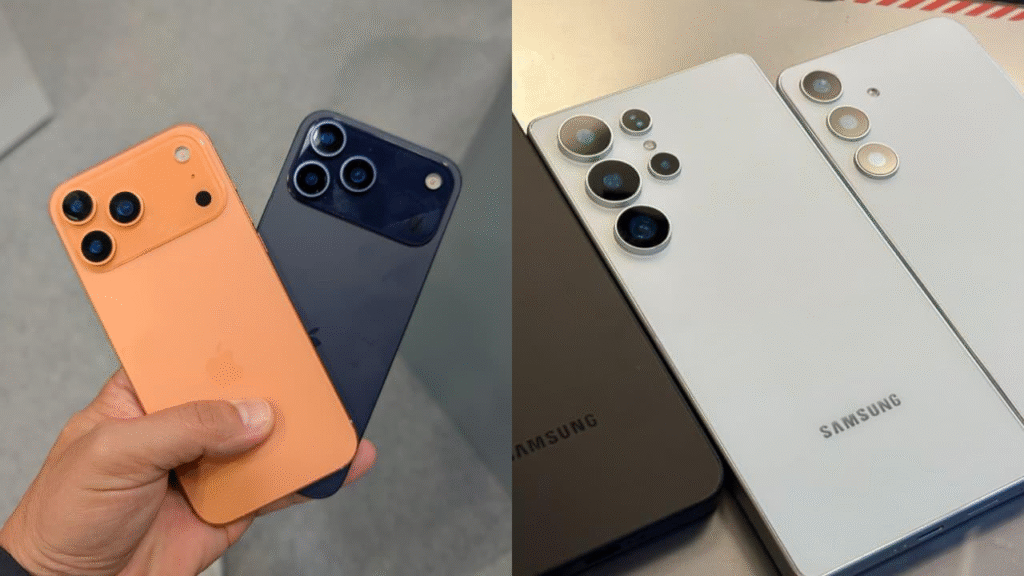
Google Pixel phones using the new Tensor G5 score lower in these raw CPU runs. Early leaked entries place the Tensor G5 near 2,296 single-core and about 6,200 multi-core in Geekbench. That shows that Google focused this chip more on AI and stability than on single-core speed.
The iPhone 16 Pro baseline ran earlier tests in the 3,300 to 3,400 range for single core and near 8,600 for multi core. That means the iPhone 17 family moves the bar by a meaningful margin for both single-core and multi-core work.
What It Means
Single-core performance still shapes everyday responsiveness. Faster single-core scores mean apps open faster and animations feel smoother. Apple once again leads in that area.
Multi-core tests show where other vendors can catch up. Samsung now sits very close to Apple in multicore results. That matters for heavy tasks like video exports, game engines, and some AI workloads. A small lead in multicore can change which phone handles sustained jobs with less slowdown.

Benchmarks are one piece of the story. Real-world factors like thermal design, battery life, and software optimization shape user experience over time. A phone that posts a top score in a single run may still throttle under long stress. Third-party testing and longer reviews will show how sustained speeds behave. For buyers, the bottom line is simple. If fluid everyday speed matters most, then single-core gains on the iPhone 17 series will be noticeable. If heavy multitasking and longer sessions matter, then the small multicore edge that Samsung shows could be relevant. For most people, both phones will feel excellent.