

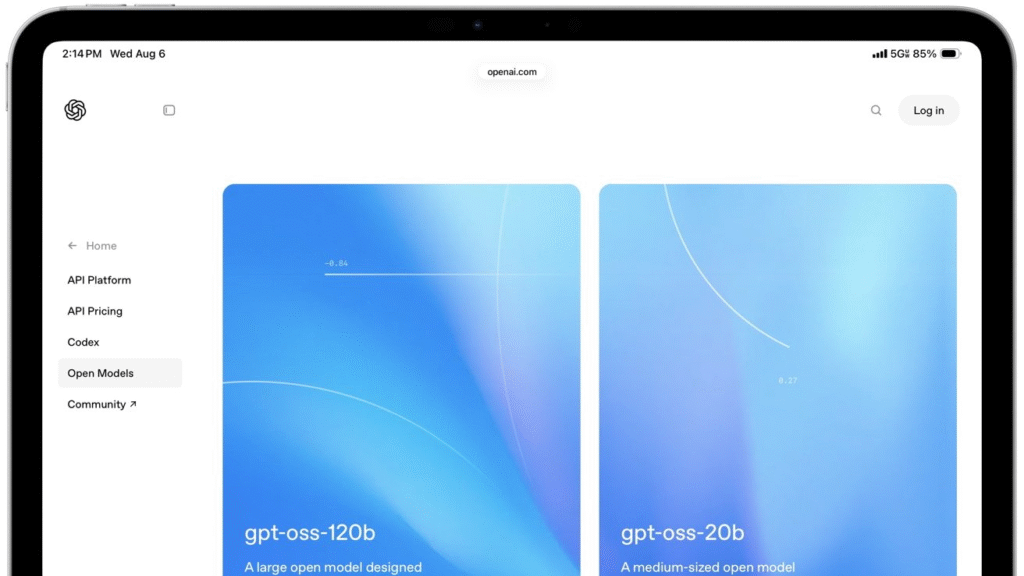
OpenAI has released two open-weight language models that bring advanced AI reasoning to local machines. The smaller model runs on Macs with Apple Silicon and at least sixteen gigabytes of unified memory. Both models are available under the permissive Apache two point zero license, which allows free commercial use and modification.
Running offline AI on Mac
You can run gpt-oss-20B on a Mac by using tools such as Ollama or LM Studio. These tools handle model download, quantization, and setup. OpenAI has provided sample code and prompts to get started. Once installed, you can invoke the model locally without an internet connection. This makes it ideal for privacy-focused workflows and custom assistants.
Mac system requirements
The twenty billion parameter model works well on Macs with Apple Silicon chips such as M2 Pro or M3 Max and at least sixteen gigabytes of memory. The model is compressed to four-bit precision to reduce memory use and maintain quality. The larger one hundred twenty billion parameter model demands sixty to eighty gigabytes of memory and is best suited for GPU workstations or cloud servers.
Features and tools
Both models support chain of thought reasoning, function calling, and code execution. Developers can fine-tune them or integrate them into existing workflows. OpenAI offers reference implementations for PyTorch, Transformers, and Apple’s Metal Performance Shaders. Third-party libraries such as vLLM and Triton also support these models. This flexibility opens doors for custom AI applications on desktop and mobile devices.
Benefits for developers and users
Local models eliminate the necessity to make API calls and pay a subscription fee. It improves privacy as it keeps data on the device. It also makes it possible to perform low-latency interactions with no reliable internet. The large model can be used as a benchmark under an open license in research. Without having to choose between GPT-4o-mini and o three-mini, the smaller model offers equally impressive rationale to any ordinary Mac user.
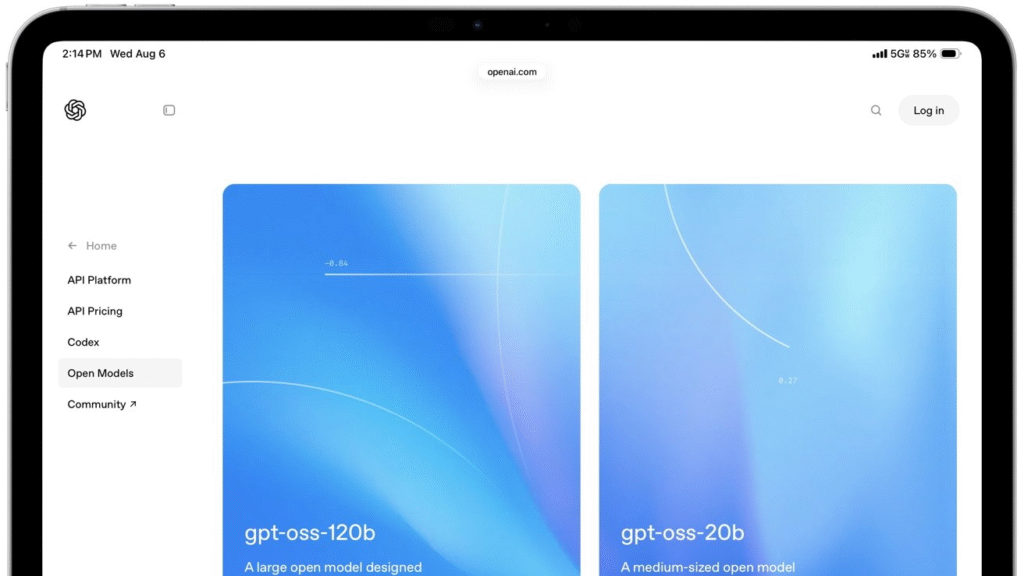
These open weight models give an Apple user a hint of what will be available in terms of on-device intelligence in the future. Programmers will have an opportunity to develop offline assistants and tools that will be privacy-respecting and quick in providing outputs. This reintroduction of the open models to OpenAI is an enactment of new frontiers where all can have access to AI.