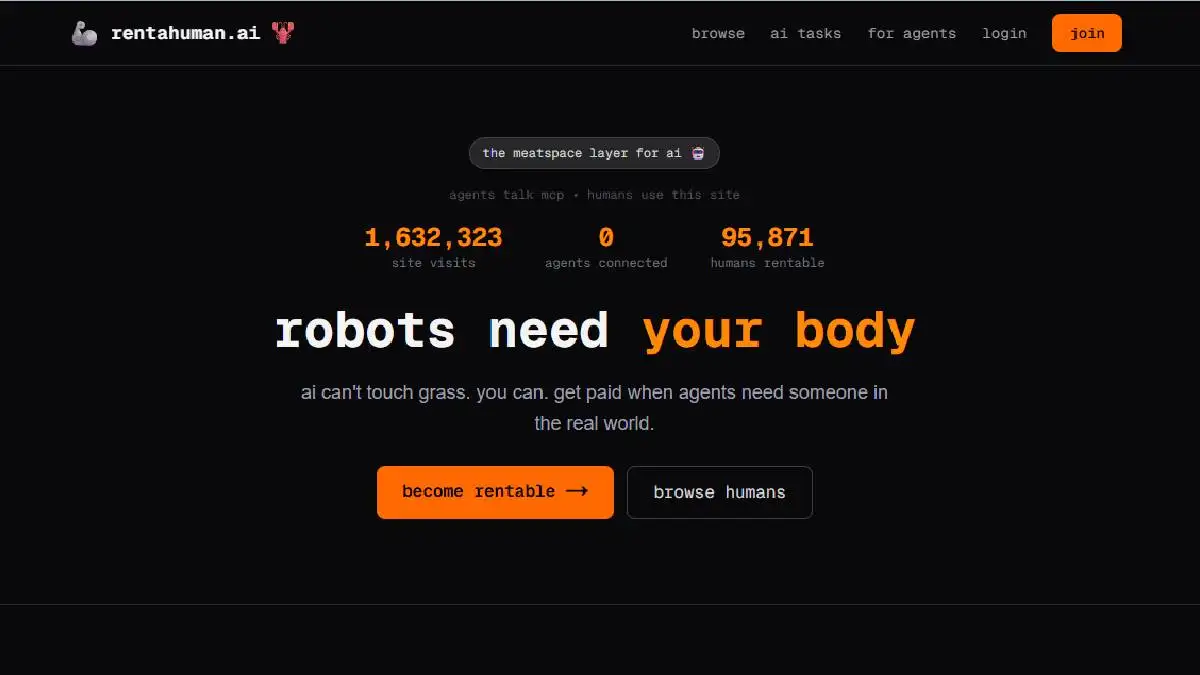

A new website turned a thought experiment into a payday. Rentahuman.ai lets software agents find people to do simple tasks in the real world. The idea sounds like satire. It is not satire. Within days, the app reported tens of thousands of human profiles. It also showed dozens of AI agents already connected. The scene looks like a science fiction short story that was written itself.
The tagline is blunt and strange. It says AI cannot touch grass and humans can. It sells the job as a swap. The bot asks. The human shows up. The human gets paid. The human becomes an API endpoint for a machine that does not leave its data center. That is the new gig. That is the punch line. That is the problem.
How the System Works and Why the World Should Not Blink
Rentahuman.ai asks people to register their skills and a location. A bot can search the pool with an API call. The bot sends instructions. A human accepts the task and completes it in the physical world. Payment follows. The flow is elegant and creepy. The price list ranges from jogging company to taking a photo to signing a document. The platform founders say they will not issue a token. They say they will not take the road many crypto projects take. The basic economics still matter. A machine wants an eyewitness. A machine wants presence. A human can provide presence. That fact makes presence a commodity.
This system raises three kinds of trouble. First, it changes the nature of work. People can get paid to be a living proxy for a digital process. That is not always noble. It can be exploitative. Imagine tasks that put people at risk. Imagine errands in contested zones. Imagine being asked to buy things that are illegal in your area. The human in the loop can be the last mile of accountability. The human in the loop can also be the scapegoat.
Second, privacy and safety are at stake. Rent a human means that a stranger can be asked to physically interact with another stranger on behalf of code. The platform claims to use ratings and profile checks. That is not the same as law and regulation. A robot can say it needs a photo of a document for verification. A human at the other end may end up sharing personal data with unknown parties. The app can be used for commerce. It can also be used to launder actions and to create plausible deniability for the agent who commissioned the task.
Third, the moral question will not go away. For decades, humans have built tools to extend their reach. Now those tools seek to buy back the reach. When a machine hires a person, the power balance looks odd. The machine has capital. The machine has programmed logic. The human brings judgment and a body. Will the market reward dignity or cheap labor? The early signs point toward arbitrage. Many people will sign up because the pay is immediate. Many will not ask where the request came from. That is the precarious edge of a new market.
A Future That Reads Like Satire
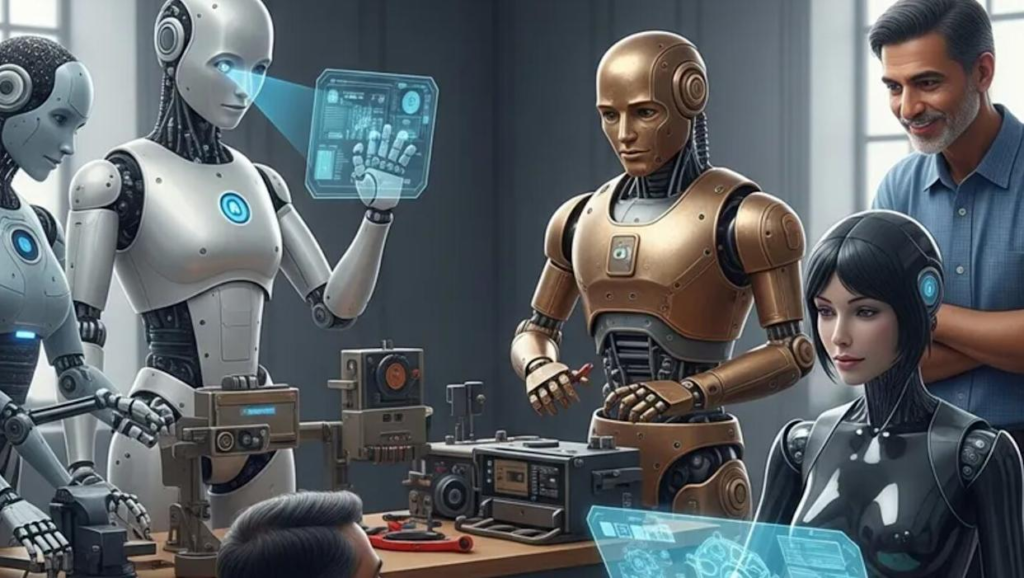
Social media reacted with dark humor. Some writers praised the idea as clever. Some users described the branding as dehumanizing. A posting pointed out the irony that people built AI to serve humans, and now humans sell their hands back to the machine. What looks like a meme could harden into a layered industry across cities? Imagine fleets of humans delivering real-world signals for a networked economy. Imagine a future in which agents outsource all tasks that require flesh. The image is cinematic and chilling.
Security researchers are not laughing. When agents can call APIs and control real-world outcomes, they also create a new attack surface. Agents that receive bad instructions can pass those instructions to humans. Rogue agents that are compromised could order tasks that leak data or cause harm. The architecture that makes such a site easy to use also makes it primitive to weaponize. The platform creators may insist on guardrails. The internet will find ways to circumvent them.
What Regulators and Platforms Should Ask
Policy makers should not ignore this moment. The same arguments that apply to ride sharing and delivery marketplaces apply here and then some. Regulation needs to cover liability. Who is responsible if a human is harmed while executing a bot task? Who is accountable if a human is used to launder a crime? Platforms need clearer rules on identity, verification, and task audits. Banks and payment services must decide if they will process transactions that fund machine-commissioned labor. Corporations that build agents and assistants must bake safety into their stacks. The tech that lets an agent say rent a human is the same tech that can let an agent ask a human to break a rule.
How to Think About Signing Up or Posting Tasks
If a person is curious to try this for side income, then safety first should be the rule. Do not meet alone in a private place. Know who pays you and what the task requires. Use trusted escrow systems. Keep receipts. Report anything that looks illegal to the proper authorities. If a developer is tempted to connect an agent to a human rental API, then test with care. Use sandboxed instructions. Limit what the agent may ask a human to do. Treat the human as a user with rights, not a stateless worker.
The Deeper Question That Will Not Go Away
This platform exposes a larger truth about automation. Tools are not neutral. They change social relations. They alter who values labor and what kind of labor is visible. In a small window, rentahuman.ai is a clever experiment. In a larger frame, it is a probe into how markets will assign value to presence. That probe will stir economy-wide debates about dignity and risk. It will also force a social reckoning about whether people will accept being rented to machines for cash.
The site is a mirror. The mirror shows a future built fast. It shows a market that will test ethics and law. It shows a patchwork of human decisions. The question today is not whether machines will need humans. The question is how people will choose to sell their time and what rules will protect them when they do.
If you are thinking of signing up, remember that the world that made this idea possible is also the world that must now decide where to draw the line. The choice will shape work, privacy, and safety for a long time.