

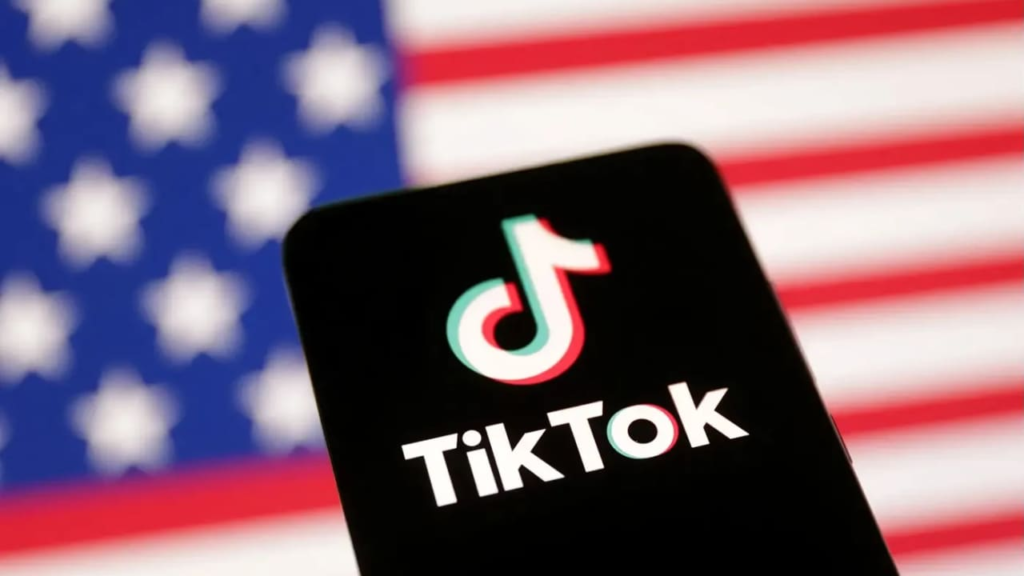
A new American majority company is now in charge of TikTok for users in the United States. The deal creates TikTok USDS Joint Venture LLC. The new company will hold U.S. user data in a U.S. cloud and will be responsible for content moderation and for retraining recommendation systems on American data. The agreement names Oracle, Silver Lake, and MGX among the principal investors and sets ByteDance at a 19.9 percent stake.
This marks the close of a long-running political issue. Lawmakers and officials had demanded a change to how TikTok operates in the U.S. The new structure aims to meet those requirements while keeping the app in service for more than 200 million American users and for millions of U.S. businesses. The new board includes U.S. executives and TikTok leaders, and the company says it will operate with defined safeguards for data and security.

New Joint Venture
The joint venture will store U.S. user data inside Oracle cloud systems located in the United States. Oracle will also play a role in code review and in verifying security processes. The joint venture plans to run a version of the app that keeps U.S. operations separate from ByteDance. TikTok’s public statement says that the move will protect national security and keep a vibrant platform for creators and small businesses.
The company has appointed executives to lead the new entity. The new U.S. company will have Adam Presser as CEO and Will Farrell as chief security officer. The global CEO of TikTok, Shou Chew, is going to be retained in the board. The arrangement keeps some technical ties with ByteDance but places control of U.S. data and moderation with the American majority group. That is the point of the compromise at the center of the agreement.
Algorithm Transition Timeline
A core promise of the deal is that the recommendation engine for U.S. users will be retrained on U.S. data and will be operated under the joint venture’s control. That work will require time. Teams must separate data flows, create secure training pipelines, and test new models for bias safety and relevance before rolling them out at scale. The company has said that the changes will not happen overnight.
Technical separation is complex. The recommendation model must be trained with large volumes of user interactions. It must also be validated so that content safety systems work as intended. Experts in machine learning and engineers who handle user privacy must design new safeguards and audit processes. Oracle and other partners will run security and auditing steps. Testing will be extensive before any major algorithmic switch is made for the U.S. feed.
What users will notice and when is uncertain. The company says U.S. users will still be able to access the global app and that usual features will remain. Some creators have already reported shifts in reach or in how videos perform. Those fluctuations can stem from many causes. They can come from normal backend changes, from seasonal traffic, or from preliminary adjustments to moderation and ranking systems ahead of the major transition. The joint venture has pledged that it will retrain models and test them in the U.S. environment before wide release.
What This Means for Creators
Creators should keep normal expectations about posting and about how the platform surfaces content. The joint venture will preserve the essential TikTok experience and include U.S. protective measures. Producers and creators who depend on TikTok as a source of revenue need to monitor measures, and they need to diversify platforms as a wise measure. New rules, new moderation flows, and algorithmic tests can change how content gets distributed during a transition period.
What This Means for Users
For regular users, the app will look familiar. The feed will not change suddenly. The company has said that U.S. users will keep access to the global content library and that the new entity will work to avoid abrupt interruptions. Users who have concerns about data privacy will see U.S. data handled under Oracle cloud protections and under audits managed by the joint venture. That is the practical trade-off this deal tries to secure.
Wider Platform Effects
The acquisition is also an indicator of a new paradigm of how social applications internationally can be able to meet national regulations. The joint venture entails a combination of private investors and big technology firms. That composition raises questions about governance. The presence of U.S. board members and third-party audits addresses some regulatory concerns. At the same time, observers will watch whether the new controls are effective and whether they can be enforced in practice. The coming months will reveal how well the design works in real use.