

Nvidia announced Rubin, its next big AI hardware, at the CES 2026. The company says Rubin is already in production and that the new design is meant to unlock far bigger models and much faster inference. The announcement promises large speed and efficiency gains and a wider platform for cloud providers and labs that train and run AI models.
Rubin is more than a single chip. Nvidia designed a family of parts that work together. The new system tackles compute, memory, and interconnect limits at once. The company describes Rubin as a platform meant to serve very large AI workloads while cutting the cost of running those workloads over time. The move sets the stage for faster model training and richer real time AI features in services that many people use every day.
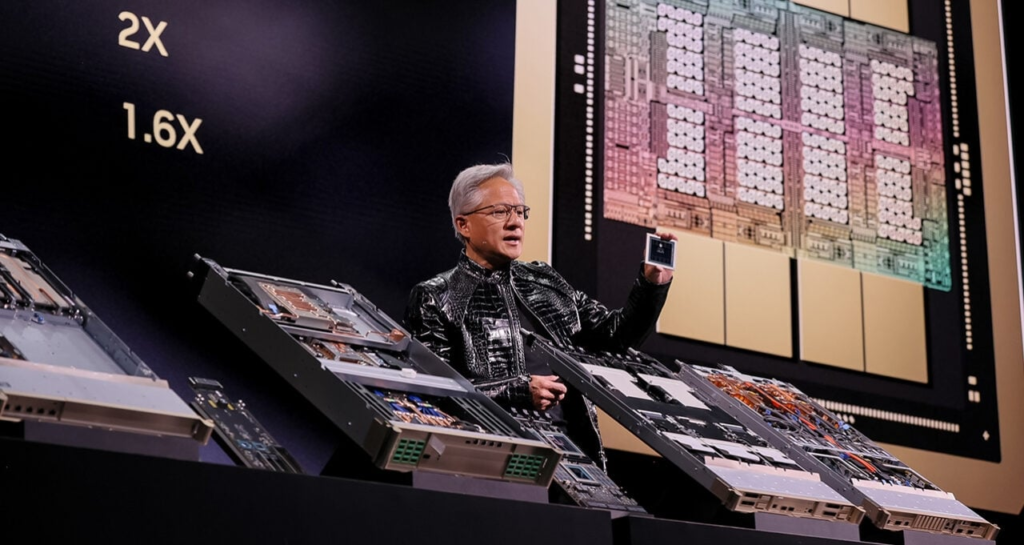
Rubin in Production
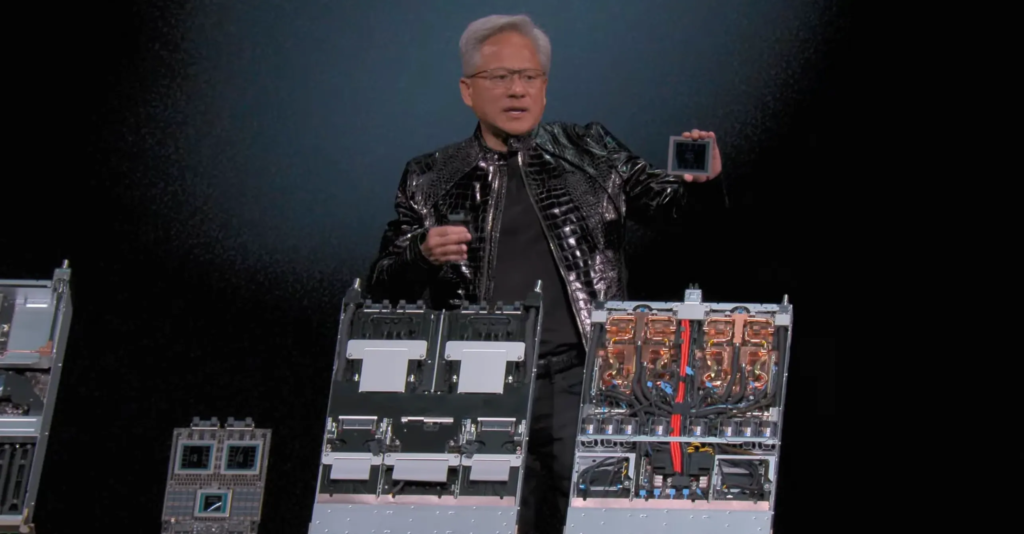
Nvidia said Rubin is already being manufactured and that partners in cloud and research are lining up to use it. The architecture combines a central Rubin GPU with companion chips that handle storage, networking, and CPU tasks that matter for advanced AI. By moving more work into the platform, Nvidia aims to avoid bottlenecks that slow down large models.
The design adds a new tier of storage for the model key value cache. That change matters for models that need a long memory or that run agent style tasks. The storage tier is meant to scale independently so that systems can hold more context without overloading the compute units. Nvidia also updated its interconnect and system fabric to move data between chips faster.
What Changes Next
Nvidia positions Rubin as a step that lets cloud providers and labs run larger models with better cost per query. The architecture also aims to give labs more headroom when they build agent systems and long context workflows. The company said Rubin will be available across multiple hardware vendors and in big cloud data centers as providers expand their AI capacity.
The change needs to be faster experiments, quicker model turns, and better applications that depend on heavy on demand inference to customers. To the industry the change highlights the extent to which central high density AI hardware has been central in cloud economics and product road maps.
Urgent Value
AI models keep getting bigger and costlier to train and run. The Rubin announcement is a bet on scaling hardware and system design together. That choices by chip makers will shape how fast companies can iterate and how many real customers can access advanced AI features without prohibitive cost.
Nvidia has repeatedly moved fast on hardware and software. Rubin shows the company pushing on every layer of infrastructure at once. That is the core claim of the announcement. Expect cloud providers and labs to test Rubin systems through the year and for companies building AI services to highlight Rubin support in product road maps.