

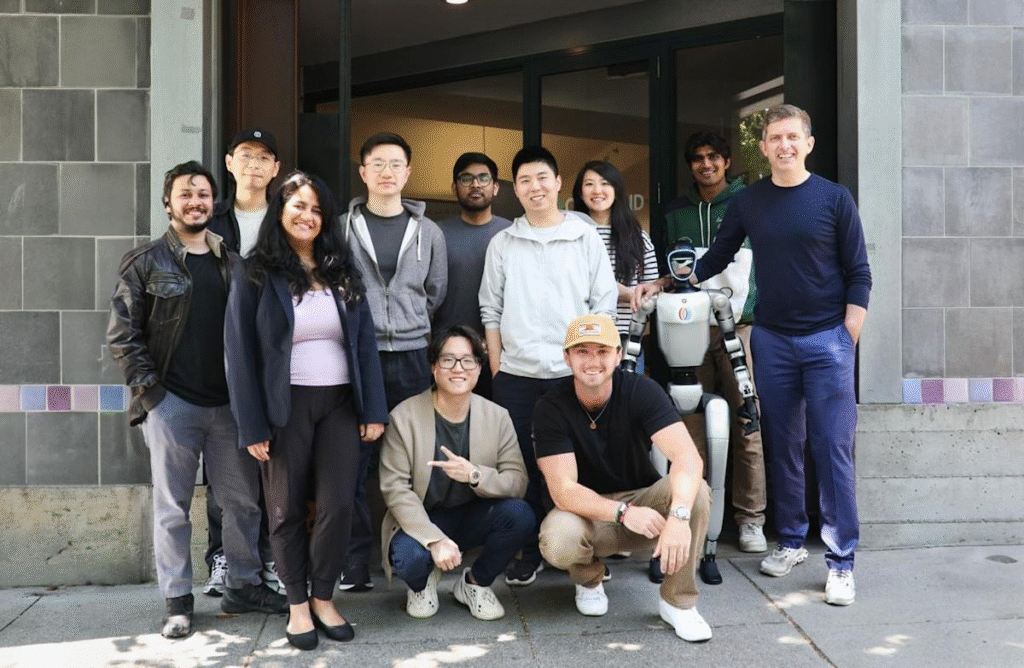
OpenMind is developing a software platform called OM1 to power the next generation of humanoid robots. The Silicon Valley startup aims to give robots a human-like operating system that can work across hardware types and share knowledge instantly. The company’s founder, Stanford professor Jan Liphardt, describes OM1 as the “Android” of robotics.
OM1: A Human-Centered Robot OS
Humanoid robots today can repeat simple tasks but struggle with human interaction. OpenMind’s OM1 layer is designed to change that. It offers perception, language understanding, motion planning, and safety checks all in one unified system. Because OM1 is open source and hardware agnostic, robot makers can focus on limbs and sensors while using the same software stack underneath. Liphardt explains that OM1 allows machines to learn in a way more similar to humans. Rather than rebuilding control code for each new robot, developers can plug into OM1 and benefit from a shared foundation.
FABRIC Protocol for Shared Intelligence
On Monday, OpenMind revealed FABRIC, a communication protocol that lets robots verify each other’s identity and securely exchange context. FABRIC will let one robot teach another a new skill without human intervention. Liphardt gives the example of language learning. A robot that masters Spanish could share pronunciation and grammar rules with another robot at the factory or home, speeding up deployment. Humans assume other people know a language. FABRIC aims to give robots the same ability.

OpenMind was founded in 2024 and has raised twenty million dollars, led by Pantera Capital. The company plans to ship ten OM1-powered robotic dogs by September as its first field test. These quadruped prototypes will live in homes and offices. OpenMind welcomes feedback from these early tests to improve OM1 rapidly. The goal is to find real-world scenarios where robots and humans can collaborate most effectively.
A shared software layer will be critical as humanoid and quadruped robots leave the lab environments and enter daily existence. The Android-style solution of OpenMind may ensure that robotics companies do not have to reinvent the wheel. OM1 and FABRIC give robots the potential of sharing knowledge like people do in the near future. This would provide an opening to make more useful, collaborative machines at home, in hospitals, and in offices all over the world.